
Skip to content

Treatment & Surgery — Glaucoma

Glaucoma Treatments

Lasers and surgery that lower eye pressure — from a repeatable laser procedure to micro-invasive and valve techniques.

Written and medically reviewed by Dr. Sachin Mungale, MBBS, MS (Ophthalmology) · Fellowship in Glaucoma, L V Prasad Eye Institute, Hyderabad · Gujarat Medical Council Reg. No. G-12281 · Reviewed on 17 November 2026

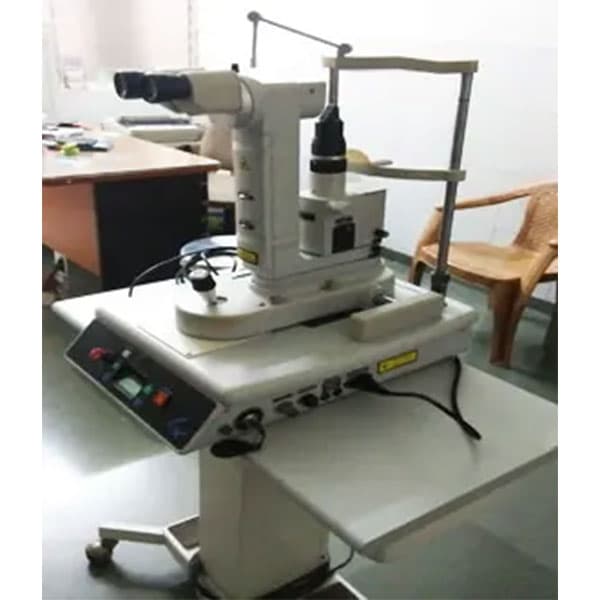
Nd:YAG laser machine used for peripheral iridotomy
Glaucoma laser treatment equipment at Mungale Eye Hospital

Nd:YAG lasera microscopic opening that improves fluid flow

Glaucoma care · 3 panels

Your specialist

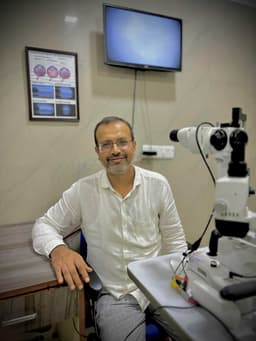
Dr. Sachin Mungale at the slit lamp

Dr. Sachin Mungale

MBBS, MS (Ophthalmology) · Fellowship in Glaucoma, L V Prasad Eye Institute, Hyderabad

Gujarat Medical Council Reg. No. G-12281

Patient guide

Understanding this treatment.

What it is

Glaucoma cannot be cured, but it can usually be controlled. Every glaucoma treatment has the same single goal: lower the Intraocular Pressure (IOP) to a level your optic nerve can live with, so that further damage is slowed or stopped.

The level that is safe differs from eye to eye, so treatment is individual. What works is decided by the type of glaucoma you have, how far it has progressed, and how your eye responds over time.

Symptoms

Most glaucoma gives no warning signs, so treatment usually begins from what the evaluation shows rather than what you feel. That is also why continuing treatment matters even when the eyes seem normal.

If pressure rises suddenly — in the uncommon acute form — the eye becomes painful and red with halos and nausea. See the urgent-help note below.

Who needs it

Anyone diagnosed with glaucoma needs some form of pressure-lowering care. People whose drainage angles are narrow may need a laser procedure even before nerve damage begins, to prevent a sudden pressure rise.

The choice among drops, laser and surgery depends on the evaluation results, not on age alone.

How it is diagnosed

Treatment choices follow the evaluation described on our glaucoma-evaluation page: eye pressure, the drainage angle on gonioscopy, the optic nerve, the visual field and the Optical Coherence Tomography (OCT) scan, plus how these change over follow-up.

Treatment options

The usual first step is prescription eye drops that lower pressure; your doctor will prescribe the ones suited to you and check how well they work at follow-up visits. Two kinds of laser are also used at Mungale Eye Hospital: Selective Laser Trabeculoplasty (SLT), which gently treats the drainage tissue to help fluid leave the eye, and Nd:YAG Laser Peripheral Iridotomy, a tiny opening made at the edge of the iris for narrow-angle eyes.

When drops and lasers are not enough, surgery creates a new route for fluid to leave the eye. Conventional surgery such as trabeculectomy, Minimally Invasive Glaucoma Surgery (MIGS), and glaucoma drainage implants are all performed here, and children born with congenital glaucoma have their own surgical options. The full procedure-by-procedure details are in the sections below.

What to expect

Drops are used at home, every day — the follow-up visit is where your doctor checks pressure and decides whether to continue, change or add a step. Laser procedures are short outpatient procedures done with numbing drops, and most people go home the same day.

Glaucoma surgery involves more preparation and more follow-up visits, since the operated eye needs watching while it settles. Your doctor will explain what your specific procedure involves.

Recovery

After laser procedures, most people are back to routine quickly with prescribed drops for a short while. After surgery, expect a protected eye, regular drops and several review visits; avoid rubbing the eye and heavy exertion until cleared.

Vision can fluctuate for a while after surgery while the new drainage settles — this is expected and is why the follow-up schedule matters.

Risks

Each option has its own balance. Drops can irritate the eye or lose effect over time. Lasers can fail to lower pressure enough or wear off. Surgery carries the usual surgical risks — infection, bleeding, pressure that ends up too low or still too high — and sometimes needs a further procedure later.

None of this replaces a discussion of your own eye; the section-by-section details below carry the specifics.

Cost and insurance

The cost depends on which treatment your glaucoma needs — drops, laser or a particular surgery — and on your examination findings.

Glaucoma procedures may be covered by health insurance, depending on your policy. See our insurance and cashless page for how claims work at Mungale Eye Hospital, or call the team before planning surgery.

When to get urgent help

Sudden severe eye pain with headache, blurred vision, halos, a red eye or nausea can mean an acute pressure rise. Call Mungale Eye Hospital or visit the nearest emergency facility immediately — do not wait for the next appointment.

Frequently asked questions

No. Glaucoma is controlled, not cured — drops keep the pressure down while you use them. If they are stopped without asking your doctor, the pressure usually rises again.

Selective Laser Trabeculoplasty (SLT) is a clinic laser procedure, not an operation in the theatre. It treats the eye's drainage tissue so fluid leaves the eye more easily and pressure comes down.

The Nd:YAG Laser Peripheral Iridotomy makes a tiny opening at the edge of the iris. It is used in narrow-angle eyes to improve fluid flow and prevent a sudden pressure rise.

Sometimes the number of drops can be reduced, and sometimes drops are still needed. That is decided at follow-up visits by checking your pressure — do not stop or restart drops on your own.

It is a small device placed in the eye to carry fluid out and lower pressure, used when other routes are not enough. Different implants are used for different situations — the sections below list the ones used here.

Childhood glaucoma is different and usually needs surgery early; several of the procedures in the sections below are designed for children. Dr. Sachin Mungale will explain the approach for your child.

By the follow-up tests — pressure, visual field and OCT — not by how the eye feels, since glaucoma rarely causes symptoms. Keeping your review appointments is part of the treatment.

01020304050607Glaucoma Treatments

Glaucoma treatment options

Drops first, then laser
or surgery when needed.

Three panels of care — laser procedures, surgery, and the surgical approaches for congenital glaucoma. Content groupings only; no one path suits every eye.


Nd:YAG laser machine used for peripheral iridotomy

Nd:YAG laser peripheral iridotomy

Laser

Focused laser care that lowers eye pressure — improving outflow, or opening a new drainage path.

Selective Laser Trabeculoplasty (SLT): A gentle laser treatment applied to the eye's drainage tissue to help fluid leave the eye more easily and lower eye pressure.

SLT lowers eye pressure for many patients and can be repeated; its effect can lessen over time and drops may still be needed. Your doctor will explain the likely benefit for your eyes.

Nd:YAG Laser Peripheral Iridotomy: A tiny laser opening made at the edge of the iris, the coloured part of the eye, to improve fluid flow in narrow-angle eyes.

Nd:YAG iridotomy creates a small opening in the iris so fluid can drain; it is a short clinic procedure, and your doctor will explain its risks and benefits for your eyes.

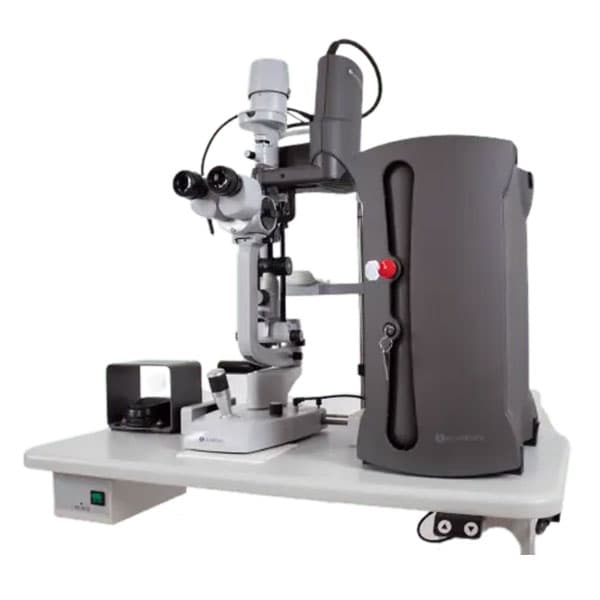
Selective Laser Trabeculoplasty (SLT) laser workstation in the treatment room at Mungale Eye Hospital

Laser workstationclinical photograph

Surgery

From filtration surgery to micro-invasive and valve techniques — matched to the stage of disease.

  1. Trabeculectomy with Mitomycin-C (MMC)
  2. Minimally Invasive Glaucoma Surgery (MIGS) — Gonioscopy-Assisted Transluminal Trabeculotomy (GATT) · Kahook Dual Blade (KDB) · iStent
  3. Valve implants — Ahmed Glaucoma Valve (AGV) · Ahmed ClearPath (ACP) · Aurolab Aqueous Drainage Implant (AADI)

Conventional glaucoma surgery (trabeculectomy and drainage implants): Surgery that creates a new route for fluid to leave the eye, or places a small drainage tube, to lower eye pressure when drops and lasers are not enough.

Minimally Invasive Glaucoma Surgery (MIGS): Small-incision procedures that improve the eye's own drainage with less tissue disturbance. Suitable for selected patients.

Gonioscopy-Assisted Transluminal Trabeculotomy (GATT): A microsurgical procedure that opens the eye's natural drainage channel from the inside through a very small incision.

Conventional surgery — Trabeculectomy with Mitomycin-C (MMC): a filtration surgery to lower intraocular pressure (IOP) by creating a drainage flap. Minimally Invasive Glaucoma Surgery (MIGS) — Gonioscopy-Assisted Transluminal Trabeculotomy (GATT) opens the trabecular meshwork to improve outflow of fluid; Kahook Dual Blade (KDB) excises part of the trabecular meshwork; iStent is a tiny device implanted to create a pathway for fluid drainage and lower IOP.

Ahmed Glaucoma Valve (AGV): A small drainage device placed in the eye to carry fluid out and lower pressure.

Trabeculotomy for congenital glaucoma (Trabeculotomy): Surgery that opens the drainage channel in infants and children born with an abnormally developed drainage system.

Valve surgeries: Ahmed Glaucoma Valve (AGV), Ahmed ClearPath (ACP), Aurolab Aqueous Drainage Implant (AADI). Surgery for congenital glaucoma: Trabeculotomy + Trabeculectomy, Goniotomy, valve surgeries for severe cases, and GATT to enhance outflow from the anterior chamber.

Congenital Glaucoma

Surgical approaches for childhood glaucoma — detailed in the surgery panel above.

  1. Trabeculotomy + Trabeculectomy
  2. Goniotomy
  3. Valve surgeries
  4. Gonioscopy-Assisted Transluminal Trabeculotomy (GATT)
Read the surgical detail

A closer look

The lasers, up close.

Nd:YAG laser peripheral iridotomy

Continue exploring

Other areas of eye care

Related articles

Patient answers

Appointments

+91 81400 50055
WhatsApp +91 81400 500552nd Floor, Vinraj Plaza, opp. Government Press, Kothi Road, Anandpura, Vadodara, Gujarat 390001Mon - Sat, 09:00 AM - 08:00 PM · Sunday closed
Book a consultation
CallWhatsAppBook