
In this article
- The full guide
- Can glaucoma be treated?
- What is a target pressure?
- How do glaucoma eye drops work, and how do I use them well?
- When is laser treatment used?
- When is glaucoma surgery needed?
- Glaucoma and cataract together
- How is the treatment choice made?
- How do I know the treatment is working?
- Cost and insurance
- Key Takeaways
- Final Thoughts
- Frequently asked questions
- ગુજરાતીમાં
Written by the Mungale Eye Hospital team
Medically reviewed by Dr. Sachin Mungale, MBBS, MS (Ophthalmology) · Fellowship in Glaucoma, L V Prasad Eye Institute, Hyderabad · Gujarat Medical Council Reg. No. G-12281 · Reviewed on 17 November 2026
Published 7 November 2026 · 7 min read
Who this page is for: Glaucoma can be controlled, though not reversed. How drops, laser and surgery lower eye pressure, who each suits, how the choice is made and how progress is checked.
Related on our site: Glaucoma Treatments
The full guide
A glaucoma diagnosis often comes with many questions about drops, laser and surgery. The aim of every treatment is the same: to protect the optic nerve so you keep the vision you have. This page explains the options and how they are chosen.
Can glaucoma be treated?
Yes, glaucoma can be treated and controlled for life in most people, but it cannot be reversed. Vision already lost to optic nerve damage does not return. Lowering eye pressure is the only proven way to slow or stop further damage: the Early Manifest Glaucoma Trial showed that treated patients progressed less often than untreated ones. That is why treatment matters even when you feel no symptoms. See whether glaucoma ever goes away.
What is a target pressure?
Your specialist sets a target pressure for each eye: a level below which damage is unlikely to progress. It depends on the pressure when glaucoma was found, how much damage is already present, your age and your other risk factors. The European Glaucoma Society guidelines describe the target as individual and reviewed over time, so it can be lowered if tests show change.
How do glaucoma eye drops work, and how do I use them well?
Drops are the usual first treatment. They lower pressure by reducing the fluid the eye makes or by helping it drain. The main families are prostaglandin analogues, beta-blockers, carbonic anhydrase inhibitors and alpha agonists, and some drops combine two.
To get the most from drops:
- Use them at the same time each day, and keep a routine, such as after brushing your teeth.
- Put in one drop, close your eye gently and press on the inner corner for a minute to keep it in the eye.
- Wait five minutes between different drops.
- Bring all your bottles to every visit.
- Mention side effects, such as redness, stinging or tiredness, rather than stopping on your own.
Drops work only if used regularly, often for life.
When is laser treatment used?
Laser is used in two main ways.
- Laser trabeculoplasty, including selective laser trabeculoplasty (SLT), treats the drainage tissue in open-angle glaucoma and ocular hypertension. The LiGHT trial, published in The Lancet in 2019, found that about three in four people treated first with SLT did not need drops to control pressure at three years. The effect can fade over time, and it can often be repeated.
- Laser iridotomy makes a tiny opening in the iris to improve fluid flow in eyes with narrow angles, lowering the risk of an acute angle-closure attack.
Both are done in the clinic with numbing drops, take a few minutes and do not need an operation theatre. Mungale Eye Hospital's glaucoma service lists both lasers among its treatments.
When is glaucoma surgery needed?
Surgery is considered when pressure stays above target despite drops and laser, when damage keeps progressing, or when drops cannot be used. Options your glaucoma specialist may discuss include:
- Drainage surgery (trabeculectomy), which creates a new drainage channel under the white of the eye, often with an anti-scarring medicine
- Glaucoma drainage implants, small tubes and valves that carry fluid out of the eye, used especially after earlier surgery or in complex glaucoma
- Minimally invasive glaucoma surgery (MIGS), smaller procedures that improve drainage for selected patients, often combined with cataract surgery
At Mungale Eye Hospital, Dr. Sachin Mungale performs these operations himself: trabeculectomy, Ahmed glaucoma valve (drainage implant) surgery, GATT (gonioscopy-assisted transluminal trabeculotomy) and combined cataract and glaucoma surgery. He explains which, if any, suits your eye.
Glaucoma and cataract together
Many people with glaucoma also develop cataract. Cataract surgery alone can lower pressure slightly in some eyes, and in angle-closure disease it can open the angle. Sometimes cataract and glaucoma surgery are combined in one operation. See cataract surgery.
How is the treatment choice made?
| Factor | How it influences the choice |
|---|---|
| Type of glaucoma | Open-angle often starts with drops or SLT; narrow angles may need iridotomy |
| Stage of damage | More damage usually means a lower target and earlier escalation |
| Pressure level | Very high pressure may need faster, stronger treatment |
| Using drops reliably | Difficulty with drops may favour laser or surgery |
| Side effects and other health | Some drops are unsuitable with asthma or heart conditions |
| Cataract | May allow a combined approach |
| Cost and access | Long-term drops add up; a one-time procedure may suit some |
How do I know the treatment is working?
You cannot tell from how your eyes feel. Success is measured by tests over time: pressure at or below target, a stable optic nerve on OCT, and stable visual fields. At first you are usually seen every few months, then less often once things are stable. See glaucoma evaluation.
Cost and insurance
Drops are an ongoing cost. Laser and surgery are one-time costs plus follow-up. Some health insurance policies cover glaucoma procedures, depending on the policy. Mungale Eye Hospital offers cashless treatment with HDFC ERGO, IFFCO Tokio, Navi General and Tata AIG, and the insurance desk can check your cover before you plan. See insurance and cashless.
Key Takeaways
- Glaucoma can be controlled but not reversed.
- Treatment lowers pressure to an individual target.
- Drops, laser and surgery are steps chosen for each eye.
- Using drops regularly is essential.
- Regular tests show whether treatment is working.
Final Thoughts
Glaucoma treatment is a long-term partnership between you and your specialist. To plan treatment with Dr. Sachin Mungale, glaucoma specialist, at Mungale Eye Hospital, Kothi, Vadodara, call or WhatsApp +91 81400 50055, or plan your visit.
Medical Disclaimer: This page is general information. It does not replace an examination of your own eyes.
Frequently asked questions
No. Drops lower eye pressure to protect the optic nerve from further damage, but they do not reverse glaucoma or bring back lost vision. They work only while you keep using them, which is why most people with glaucoma use drops long term. Regular follow-up checks whether the drops are keeping pressure at your target.
Not in the usual sense. Glaucoma laser treatments are done in the clinic, sitting at a laser machine, with numbing drops and a contact lens on the eye. They take a few minutes, need no cut or stitches, and most people go home soon after. Some blurring or mild ache for a few hours is common.
Sometimes. Many people need fewer drops or none after successful surgery, but some still need drops to reach their target pressure. Your specialist decides based on your pressure and tests at follow-up. Never stop drops in the operated or other eye without being told to, because pressure can rise without any warning.
A drainage implant is a small tube, sometimes with a valve, placed in the eye to carry fluid to a plate under the outer surface, where it is absorbed. It lowers pressure when other surgery has not worked or is unlikely to work, such as in complex or repeat cases. Your specialist explains whether it suits your eye.
You usually cannot tell from how your eyes feel, because glaucoma rarely causes symptoms. Treatment is working if your pressure stays at or below target and repeated OCT scans and visual field tests stay stable. That is why follow-up visits matter, even when you feel well. Changes in tests may mean treatment needs adjusting.
No, not without your doctor's advice. Normal pressure on treatment usually means the drops are working, not that glaucoma has gone. Stopping them often lets pressure rise again silently, which can damage the optic nerve. If drops are hard to use, cost too much or cause side effects, talk to your specialist about alternatives.
Most standard health insurance policies in India do not cover ongoing outpatient drops, though some include outpatient benefits. Laser and surgical procedures are more often covered, depending on your policy. The insurance desk at Mungale Eye Hospital can check your cover, and the team can discuss lower-cost generic options if drop costs are a concern.
ગુજરાતીમાં
ઝામરની સારવારનો હેતુ આંખનું પ્રેશર ઘટાડીને ઓપ્ટિક નર્વને બચાવવાનો છે. ટીપાં, લેસર કે ઓપરેશનથી પ્રેશર ઘટાડાય છે. ગયેલી નજર પાછી આવતી નથી, પણ સારવારથી બાકીની નજર બચાવી શકાય છે.
રોજ એક જ સમયે ટીપું નાખો, આંખ બંધ કરી અંદરના ખૂણે એક મિનિટ દબાવો. બે ટીપાં વચ્ચે પાંચ મિનિટ રાહ જુઓ.
Related questions this page covers
- Can glaucoma be treated?
- What is a target pressure?
- How do glaucoma eye drops work, and how do I use them well?
- When is laser treatment used?
- When is glaucoma surgery needed?
- How is the treatment choice made?
- How do I know the treatment is working?
- Will eye drops make my glaucoma go away?
- Is laser treatment for glaucoma an operation?
- If I have glaucoma surgery, can I stop my drops?
- What is a glaucoma drainage implant?
- How do I know my glaucoma treatment is working?
- Can I stop my drops if my pressure is normal now?
- Are glaucoma drops covered by insurance?
Author and medical reviewer
Prepared by the Mungale Eye Hospital team. Medically reviewed and approved by Dr. Sachin Mungale, MBBS, MS (Ophthalmology), Glaucoma Fellowship (L V Prasad Eye Institute, Hyderabad) · Gujarat Medical Council Reg. No. G-12281 · Last reviewed 17 November 2026
Sources
- Gazzard G, Konstantakopoulou E, Garway-Heath D, et al. Selective laser trabeculoplasty versus eye drops for first-line treatment of ocular hypertension and glaucoma (LiGHT): a multicentre randomised controlled trial. Lancet. 2019;393(10180):1505 to 1516.
- Heijl A, Leske MC, Bengtsson B, et al. Reduction of intraocular pressure and glaucoma progression: results from the Early Manifest Glaucoma Trial. Arch Ophthalmol. 2002;120(10):1268 to 1279.
- European Glaucoma Society. Terminology and Guidelines for Glaucoma, 5th Edition. Br J Ophthalmol. 2021;105(Suppl 1):1 to 169.
- Gedde SJ, Vinod K, Wright MM, et al. Primary Open-Angle Glaucoma Preferred Practice Pattern. Ophthalmology. 2021;128(1):P71 to P150.
- Mungale Eye Hospital website: glaucoma treatments page and Dr. Sachin Mungale's profile, for the treatments listed and the specialist named.
Reviewed by
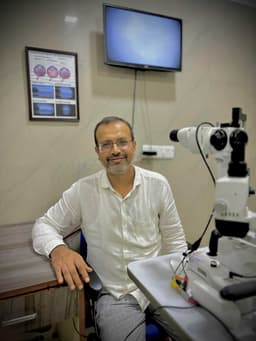
MBBS, MS (Ophthalmology) · Fellowship in Glaucoma, L V Prasad Eye Institute, Hyderabad
Gujarat Medical Council Reg. No. G-12281
Book a consultation
2nd Floor, Vinraj Plaza, opp. Government Press, Kothi Road, Anandpura, Vadodara, Gujarat 390001
Mon - Sat, 09:00 AM - 08:00 PM · Sunday closed
Start with a conversation.
Appointments
+91 81400 50055