
Written by the Mungale Eye Hospital team
Medically reviewed by Dr. Meeta Mungale, MBBS, MS (Ophthalmology), DNB · Fellowship in Cornea & Anterior Segment, L V Prasad Eye Institute, Hyderabad · Gujarat Medical Council Reg. No. G-39262 · Reviewed on 17 October 2026
Published 17 October 2026
Part of our guide: Diabetic Retinopathy: Symptoms, Screening, Stages & Treatment
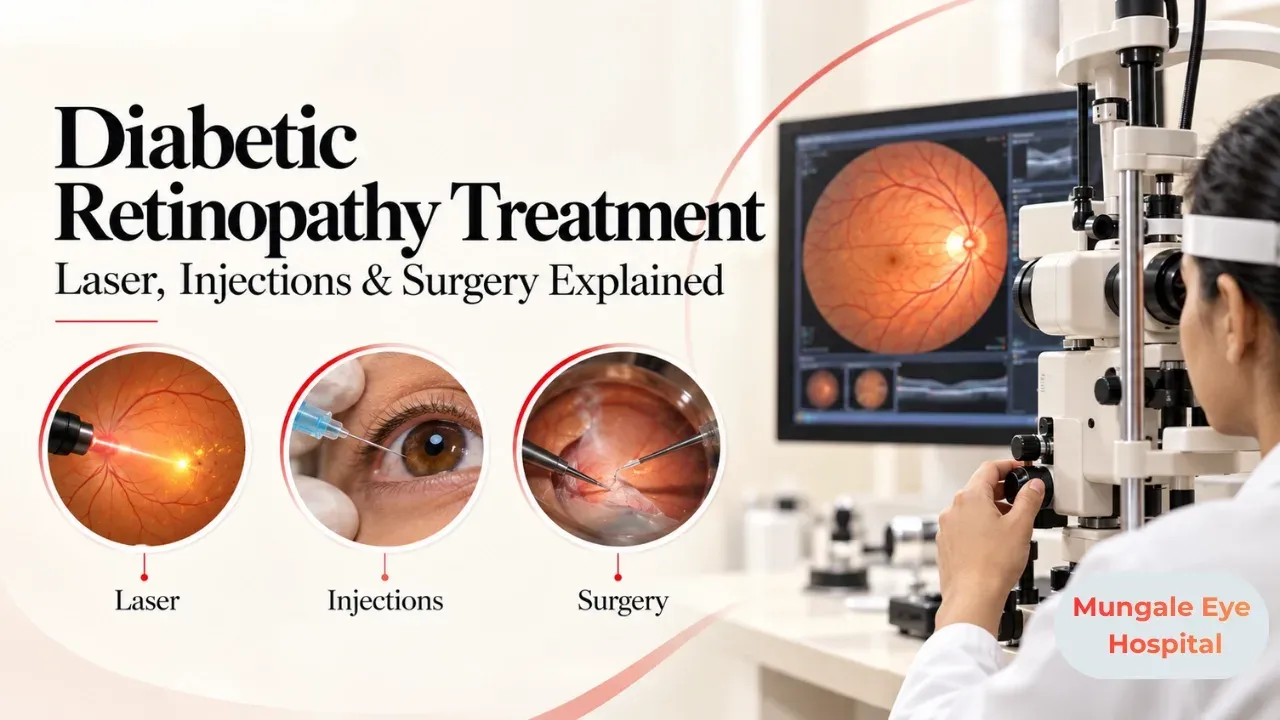
Diabetic retinopathy is treated based on what the eye examination and scans show. Anti-VEGF injections are often used for macular edema and sometimes for proliferative disease. Laser treatment seals leaks or shrinks abnormal vessels. Vitrectomy surgery is used for bleeding that does not clear or retinal detachment. Controlling diabetes remains the foundation at every stage.
Who Needs Treatment?
Treatment is usually advised for:
Mild and moderate stages without macular swelling are usually monitored, with a focus on sugar, blood pressure and cholesterol control.
Anti-VEGF Injections
What they do
VEGF is a substance that causes leaky, abnormal vessels. Anti-VEGF medicines block it, reducing swelling and new vessel growth.
How they are given
The eye is numbed and cleaned, and a tiny amount of medicine is injected into the eye with a very fine needle. It takes only a few minutes.
What to expect
Several injections are usually needed, often monthly at first, then spaced out. Vision may improve in many patients with macular edema.
Steroid implants
In some patients, especially those not responding well to anti-VEGF, steroid injections or implants may be used.
Laser Treatment
Pan-retinal photocoagulation (PRP)
Used for proliferative retinopathy. Many small laser spots are applied to the outer retina, reducing the signal for new vessels to grow and lowering the risk of bleeding.
Focal or grid laser
Used in selected cases of macular edema to seal specific leaks.
What to expect
Laser is usually done in the clinic, sometimes in more than one session. Some side vision or night vision may be reduced after PRP, but it protects central vision.
Vitrectomy Surgery
When it is needed
What it involves
The surgeon removes the vitreous gel, blood and scar tissue, and may apply laser during the surgery. Recovery takes several weeks.
Why Diabetes Control Still Matters
Treatment helps the eye, but sugar, blood pressure, cholesterol and kidney health decide how the disease behaves over time. Stopping smoking and regular follow-up are equally important.
Key Takeaways
Final Thoughts
Modern treatment can save sight for many people with diabetic retinopathy, especially when started early. Missing follow-ups is one of the main reasons vision is lost. For diabetic retina evaluation and treatment, you can consult Dr. Meeta Mungale, an ophthalmologist at Mungale Eye Hospital in Vadodara.
Frequently Asked Questions
Most people feel only mild pressure. The eye is numbed with drops before the injection, and the procedure takes a few minutes. Some may notice mild irritation or a small red spot on the eye afterward, which settles.
It varies. Many patients need monthly injections at first, then less frequent ones as the eye stabilises. Your doctor will use OCT scans to decide when to repeat or space out treatment.
Laser mainly prevents further damage and protects remaining vision. It does not usually restore lost vision. For macular edema, injections are more likely to improve sight, sometimes combined with laser.
Vitrectomy is a well-established surgery with good results in suitable patients. Like any surgery, it has risks such as infection, raised eye pressure or cataract. Your surgeon will explain these based on your eye.
Do not stop on your own. Diabetic eye disease can return or worsen without warning. Regular reviews help your doctor decide when to pause, continue or restart treatment safely.
Good sugar control slows progression and helps treatment work, but it cannot reverse advanced damage on its own. People with macular edema or proliferative disease usually need eye treatment as well.
Sources and further reading
Reviewed by

MBBS, MS (Ophthalmology), DNB · Fellowship in Cornea & Anterior Segment, L V Prasad Eye Institute, Hyderabad
Gujarat Medical Council Reg. No. G-39262
Book a consultation
2nd Floor, Vinraj Plaza, opp. Government Press, Kothi Road, Anandpura, Vadodara, Gujarat 390001
Mon - Sat, 09:00 AM - 08:00 PM · Sunday closed
Related Articles
Start with a conversation.
Appointments
+91 81400 50055