
Medically reviewed by Dr. Meeta Mungale, MS (Ophthalmology), DNB · Cornea Fellowship, LVPEI · Gujarat Medical Council Reg. No. G-39262 · Reviewed on 3 October 2026
Published 28 September 2026 · Updated 28 September 2026
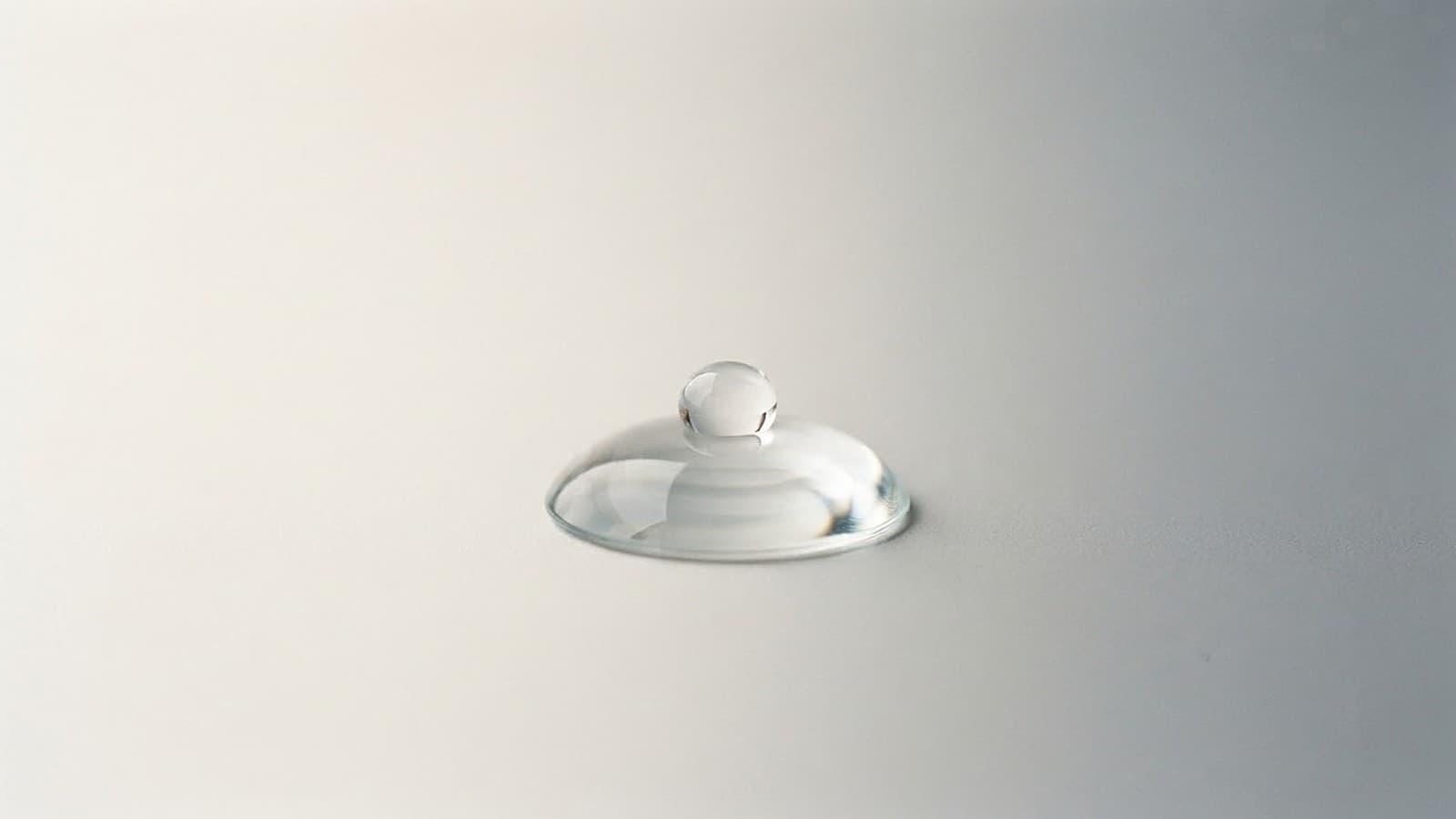
Dry eye disease is a common condition in which the tear film does not keep the surface of the eye adequately lubricated and protected. It can cause burning, grittiness, redness, watering and periods of blurred or fluctuating vision.
For some people, symptoms appear mainly after several hours of computer work. For others, dryness is linked to contact lenses, eyelid problems, medicines, environmental conditions or reduced tear production.
The important point is that dry eye is not the same in everyone. Finding out why the eyes are becoming dry is often the first step towards getting better and more lasting relief.
Quick Answer
Dry eye disease develops when the tears on the surface of the eye are either insufficient, evaporate too quickly, or become unstable. The condition can cause irritation, burning, redness, watering, light sensitivity, a gritty feeling and fluctuating vision.
Common contributors include prolonged screen use, reduced blinking, air conditioning, dry or dusty surroundings, contact lenses, certain medicines, eyelid or meibomian gland problems and some systemic conditions.
Treatment depends on the cause. It may involve lubricating eye drops, changes to screen and environmental habits, treatment of eyelid or meibomian gland problems, prescription medicines or, in selected patients, punctal plugs.
Why Does Dry Eye Matter?
It is easy to think of dry eye as nothing more than a temporary feeling of dryness.
That is not always the case.
The tear film has an important job. It keeps the front surface of the eye smooth, helps maintain comfortable vision and protects the ocular surface.
When the tear film becomes unstable, even the quality of vision can change. Some people notice that things look slightly blurred while reading or working on a computer, then become clearer after they blink.
Persistent dryness can also make contact lenses uncomfortable and may interfere with reading, driving, computer work or other everyday activities.
That does not mean every case of dry eye is serious. It means that recurrent symptoms deserve to be understood rather than repeatedly ignored.
What Is Dry Eye Disease?
Dry eye disease is a condition affecting the tear film and ocular surface.
The tear film is the thin layer of tears covering the front of the eye. It is made up of different components that work together to keep the eye surface healthy and reduce evaporation.
Every time you blink, this tear film spreads across the cornea.
The cornea is the clear front part of the eye and contributes significantly to focusing light. A smooth, well-lubricated corneal surface is therefore important for comfortable and clear vision.
Dry eye can develop when:
This is why someone can have dry eye symptoms even when their eyes appear watery.
Excess watering can sometimes be the eye's response to irritation. Those reflex tears do not necessarily provide the stable tear film needed for normal lubrication.
What Causes Dry Eye Disease?
There is rarely one explanation that fits every patient.
An ophthalmologist will usually consider several possible contributors.
Evaporative Dry Eye
One common form of dry eye occurs when tears evaporate from the eye surface too quickly.
The outer oily component of the tear film helps slow evaporation. This oil is produced by tiny glands in the eyelids called meibomian glands.
When these glands do not function properly, the tear film can become less stable.
This is one reason an examination of the eyelids and meibomian glands can be useful in someone with persistent dry-eye symptoms.
Reduced Tear Production
The lacrimal glands produce the watery component of tears.
If tear production decreases, the eye may not receive enough lubrication.
Age, certain medicines, systemic conditions and other factors can contribute to reduced tear production.
The symptoms can range from mild irritation to significant discomfort, depending on the individual.
Screen Use
Long periods of screen work are a familiar trigger for many people with dry-eye symptoms.
The problem is not simply that a person has spent a particular number of hours looking at a screen.
When people concentrate on text, spreadsheets, videos or games, they may blink less often. Some people also blink incompletely.
As a result, the tear film may break up more quickly.
This is why the eyes can start feeling dry, tired or gritty after several hours of computer work even when they felt completely normal earlier in the day.
Air Conditioning, Fans and Dry Air
Indoor air can also make symptoms worse.
Air conditioners and fans can increase evaporation, especially when air is blowing directly towards the face.
Dry environments, dust and wind may have a similar effect.
Someone who notices that symptoms are worse in a particular room or workplace may be dealing with an environmental trigger as well as an underlying tendency towards dry eye.
Contact Lenses
Contact lenses can contribute to dryness in some people.
Long wearing times, poor lens hygiene, an unsuitable lens or an already-irritated ocular surface can make symptoms more noticeable.
If contact lenses that were previously comfortable suddenly become difficult to wear, it is worth having the eyes examined rather than simply pushing through the discomfort.
Medicines and Other Medical Conditions
Certain medicines can contribute to dry-eye symptoms.
Some systemic medical conditions can also affect tear production, the eyelids or the ocular surface.
This is why your ophthalmologist may ask about medicines you take regularly and about your general medical history.
What Are the Symptoms of Dry Eye?
Dry eye does not always feel the way people expect.
You may notice:
Symptoms may affect one eye or both.
They may also change during the day. Someone might feel relatively comfortable in the morning and become increasingly uncomfortable after several hours of screen use.
Can Dry Eye Cause Blurry Vision?
Yes, dry eye can cause temporary or fluctuating blurred vision.
The tear film forms part of the optical surface of the eye. When it becomes uneven or breaks up between blinks, vision can temporarily become less clear.
A common pattern is blurred vision that improves after blinking.
However, this does not mean every episode of blurred vision is caused by dry eye.
If vision remains blurred, is getting worse, or changes suddenly, it should be assessed by an ophthalmologist.
When Should You See an Ophthalmologist?
Not every dry or tired eye requires an immediate appointment.
But an examination is worth considering when symptoms:
When is urgent eye care needed?
Sudden loss of vision, severe eye pain, significant eye injury, or an abrupt and unusual change in vision should not be assumed to be dry eye.
These symptoms require prompt medical assessment.
How Is Dry Eye Diagnosed?
Dry eye is diagnosed using a combination of symptoms, medical history and examination findings.
There is no single test that explains every case.
A detailed evaluation can help determine whether the problem is mainly related to tear production, tear evaporation, the eyelids, the ocular surface or a combination of factors.
Tear-Film Assessment
The ophthalmologist may assess how stable the tear film remains over the eye surface.
A tear film that breaks up too quickly can contribute to fluctuating vision and irritation.
Understanding this behaviour can help guide treatment.
Meibomian Gland Examination
The meibomian glands are located within the eyelids and produce oils that help reduce evaporation of tears.
If these glands become blocked or do not function normally, the tear film may become unstable.
Examining the eyelid margins and glands can therefore be an important part of a dry-eye evaluation.
Examination of the Cornea and Ocular Surface
The cornea and conjunctiva can show signs of irritation associated with dry eye.
A slit lamp is a specialised microscope used by ophthalmologists to examine these structures in detail.
The examination can also help identify other eye conditions that might be causing similar symptoms.
Other Dry-Eye Tests
Depending on the patient's symptoms and examination findings, additional tests may be used to evaluate:
The purpose is not simply to label an eye as "dry."
The more useful question is why the tear film is not functioning properly and what needs to be addressed.
The Mungale Eye Hospital content plan specifically identifies tear-film evaluation, meibomian gland assessment and other dry-eye evaluations as important diagnostic areas for this pillar.
How Is Dry Eye Treated?
Treatment depends on what is causing the dryness.
There is no single dry-eye treatment that is appropriate for everyone.
A patient with screen-related symptoms may need a different approach from someone with meibomian gland dysfunction or significantly reduced tear production.
Artificial Tears
Lubricating eye drops, commonly called artificial tears, can replace or supplement the tear film.
They may reduce:
Different formulations are available, and the most suitable option depends on the individual's symptoms.
If someone needs drops very frequently and still does not get adequate relief, it is worth discussing the situation with an ophthalmologist rather than simply continuing to change brands.
Treating Eyelid and Meibomian Gland Problems
When evaporative dry eye is related to meibomian gland dysfunction, treatment may focus on the eyelids as well as the tear film.
Appropriate eyelid care may form part of the treatment plan.
The exact approach depends on what the ophthalmologist finds during examination.
Prescription Treatment
Some patients require prescription treatment to address ocular-surface inflammation or other underlying problems.
These medicines are not interchangeable, and they should be used according to professional advice.
In particular, steroid eye drops should not be started or continued without ophthalmic supervision because inappropriate or prolonged use can cause complications.
Punctal Plugs
Punctal plugs are tiny devices placed into the small tear-drainage openings called puncta.
Their purpose is to reduce tear drainage so that tears remain on the surface of the eye for longer.
They may be considered for selected patients with particular patterns of dry eye.
They are not a routine solution for every person with dryness.
The Mungale Eye Hospital content strategy specifically includes punctal plugs as a dedicated treatment topic and recommends explaining patient selection rather than presenting them as a universal treatment.
Can Lifestyle Changes Help Dry Eye?
Yes. Daily habits can make a noticeable difference for some people.
The most useful changes depend on what is triggering the symptoms.
Take Regular Screen Breaks
During prolonged computer work, step away from the screen regularly.
The commonly discussed 20-20-20 rule involves looking approximately 20 feet away for 20 seconds every 20 minutes.
It is best viewed as a practical screen-break habit rather than a guarantee against dry eye.
There is no universal number of screen hours that causes dry eye. Individual factors such as blinking, tear-film stability and the surrounding environment matter.
Remember to Blink
People tend to blink less while concentrating on a screen.
Making a conscious effort to blink fully and regularly can help spread the tear film across the eye.
Reduce Direct Airflow
If a fan or air conditioner is blowing directly towards your face, changing its direction may reduce evaporation.
This is a simple adjustment but can be useful for people whose symptoms are strongly linked to their environment.
Be Careful With Contact Lenses
Follow the recommended wearing schedule and lens-care instructions.
If your eyes become persistently uncomfortable while wearing lenses, have them assessed rather than assuming that discomfort is normal.
Protect the Eyes From Dust and Wind
People who spend considerable time outdoors in dusty or windy conditions may benefit from suitable protective eyewear.
The aim is to reduce exposure to factors that aggravate the ocular surface.
The Dry Eye content cluster specifically includes screen use, environmental factors and contact lenses as important patient-level causes and management considerations.
Does the 20-20-20 Rule Really Help?
It can be a useful habit for people who develop eye discomfort during prolonged screen work.
The idea is simple: every 20 minutes, look away from the screen at something roughly 20 feet away for about 20 seconds.
This gives your eyes a short break from continuous near-screen viewing.
It also creates an opportunity to blink normally.
But the 20-20-20 rule is not a treatment for every form of dry eye. If symptoms continue despite better screen habits, the underlying cause should be investigated.
The content strategy for this pillar also specifically advises against claiming a universal screen-time threshold for dry eye.
Can Dry Eye Be Cured Permanently?
Sometimes the contributing cause can be reduced or removed, and symptoms may improve considerably.
For other people, dry eye is a long-term condition that needs ongoing management.
For example, if environmental exposure is a major trigger, changing the environment may make a significant difference. If eyelid gland dysfunction or another chronic factor is involved, longer-term management may be necessary.
So there is no single answer to the question, "Will dry eye go away permanently?"
The better question is:
What is causing my dry eye, and can that cause be treated or controlled?
The Mungale content plan identifies permanent cure versus long-term treatment as one of the main patient questions for this pillar.
What Happens If Dry Eye Is Not Treated?
The effect varies from person to person.
Mild occasional dryness may remain a temporary nuisance. Persistent or more significant dry eye, however, can continue to affect comfort, visual quality and contact-lens tolerance.
The ocular surface may also become increasingly irritated.
Another concern is that people sometimes assume every episode of redness, burning or blurred vision is simply dry eye. Other eye conditions can produce similar symptoms.
If the symptoms keep coming back, an examination is more useful than repeatedly guessing at the cause.
Can Dry Eye Affect LASIK Candidacy?
It can be relevant to a LASIK evaluation.
The tear film and ocular surface are important considerations before refractive surgery. A person with significant dry-eye symptoms may need the ocular surface assessed and managed before proceeding.
This does not mean that everyone with dry eye is automatically excluded from LASIK.
Suitability depends on several factors, including the condition of the cornea, tear film, refractive error and overall eye health.
The Mungale content strategy specifically recommends connecting the Dry Eye pillar with the LASIK/Refractive Surgery cluster because pre-LASIK dry-eye assessment is an important part of refractive-surgery evaluation.
Which Dry Eye Treatment Is Right for You?
There is no single "best" treatment.
The appropriate approach depends on the underlying problem.
This is a general framework, not a treatment prescription.
Two people can have almost identical symptoms and still need different treatment.
Common Myths About Dry Eye
"If my eyes are watering, I cannot have dry eye."
Not necessarily.
Irritation can trigger reflex tearing. Those extra tears may not remain on the eye surface in the same way as a stable tear film.
"Dry eye only happens to older people."
No.
Age can be a factor, but younger people can also develop dry-eye symptoms due to screen habits, contact lenses, environmental conditions, medicines and other causes.
"Artificial tears fix every case."
Artificial tears can provide useful relief, but they may not address the reason the eye is becoming dry.
Persistent symptoms deserve an assessment.
"There is a fixed number of screen hours that causes dry eye."
There is no universal threshold.
How a person's eyes respond to screen use depends on blinking, tear-film stability, environment and other individual factors.
"Dry eye is too minor to see an eye doctor about."
Occasional mild dryness may not require extensive investigation.
Persistent symptoms are different. If dryness repeatedly affects comfort, vision, contact-lens use or daily activities, an eye examination can help identify the cause.
Mistakes to Avoid When Managing Dry Eye
| Situation | Possible approach |
|---|---|
| Occasional mild dryness | Environmental changes and lubricating drops |
| Screen-related symptoms | Regular breaks, blinking and appropriate lubrication |
| Evaporative dry eye | Assessment and management of eyelid/meibomian gland problems |
| Reduced tear production | Lubrication and, where appropriate, prescription treatment |
| Persistent symptoms | Detailed ocular-surface and tear-film evaluation |
| Selected patients with poor tear retention | Punctal plugs may be considered |
| Dry eye associated with another eye condition | Treatment directed at the underlying condition |
One of the most common mistakes is assuming that every irritated eye needs the same treatment.
Another is repeatedly buying different eye drops without investigating why the symptoms keep returning.
Contact-lens users may also continue wearing lenses despite persistent discomfort.
Some people overlook their environment. Direct air from an air conditioner or fan can make symptoms worse, particularly in someone already prone to tear evaporation.
Self-medicating with steroid eye drops is another mistake to avoid. These medicines have legitimate uses, but they need appropriate ophthalmic supervision.
Perhaps the biggest mistake is ignoring persistent symptoms simply because dry eye is common.
Common does not mean identical.
How Can You Manage Dry Eye Over the Long Term?
A practical long-term approach starts with understanding the underlying cause.
Keep track of your triggers
Notice whether symptoms are worse:
This information can be useful during an eye consultation.
Follow your treatment consistently
If your ophthalmologist recommends regular lubrication or another treatment, use it according to the prescribed instructions.
Take care of your screen habits
Break up long periods of uninterrupted screen viewing and remember to blink normally.
Review contact-lens use
Persistent discomfort while wearing lenses deserves professional assessment.
Do not ignore changing symptoms
If your symptoms change significantly or your vision becomes suddenly worse, do not simply assume that the dry eye has become more severe.
A different eye problem may need to be ruled out.
When Does Dry Eye Need a Corneal Assessment?
Persistent dry-eye symptoms sometimes need a closer look at the cornea and ocular surface.
This may be particularly relevant when a person has:
The cornea is central to clear vision, so persistent surface problems should be evaluated carefully.
Mungale Eye Hospital's documented ophthalmic services include corneal evaluation and treatment, along with areas such as corneal infections, keratoconus, corneal collagen cross-linking, scleral lenses and punctal plug insertion.
Choosing an Eye Hospital for Dry Eye Treatment
If dry-eye symptoms have become persistent, the useful question is not simply whether a clinic can prescribe artificial tears.
A proper evaluation should consider the whole ocular surface.
This may include:
Treatment can then be matched to the findings.
Mungale Eye Hospital in Vadodara provides ophthalmic care across cornea, glaucoma, cataract and general eye-care services. Its documented corneal capabilities include evaluation and treatment of ocular-surface and corneal conditions.
Key Takeaways
Final Thoughts
Dry eye can be surprisingly disruptive.
For one person, it may be a little irritation after a long day at the computer. For another, it can mean persistent burning, difficulty wearing contact lenses or vision that repeatedly goes in and out of focus.
The symptoms may look similar, but the reasons behind them can be quite different.
That is why identifying the cause matters. A proper examination can show whether the main issue is tear production, rapid evaporation, meibomian gland dysfunction, the ocular surface or another eye condition altogether.
If your dry-eye symptoms keep returning or are affecting your vision and everyday activities, consider having your eyes examined by a qualified ophthalmologist.
Medical note: This article is intended for general education and does not replace an individual eye examination. Dry-eye symptoms can overlap with other eye conditions. Treatment, including prescription eye drops and procedures such as punctal plug insertion, should be recommended according to the patient's examination findings.
FAQ SECTION
Dry eye can result from insufficient tear production, excessive tear evaporation or a combination of both. Screen use, reduced blinking, contact lenses, dry environments, eyelid gland problems, certain medicines and some systemic conditions can contribute. The underlying cause is best determined through an eye examination rather than from symptoms alone.
Yes. An unstable tear film can temporarily affect the smooth optical surface of the cornea, resulting in fluctuating or blurred vision. Some people notice that their vision becomes clearer after blinking. Persistent or sudden changes in vision should not automatically be attributed to dry eye and should be assessed by an ophthalmologist.
That depends on the cause. Some people improve considerably after an environmental trigger or contributing factor is addressed. Other forms of dry eye are chronic and need ongoing management. The aim is to identify the cause, control symptoms and maintain a healthy ocular surface rather than assuming that every case can be permanently eliminated.
Diagnosis usually involves a discussion of symptoms and medical history followed by an examination of the ocular surface and tear film. Depending on the patient's symptoms, an ophthalmologist may assess tear production, tear-film stability, the cornea, conjunctiva and meibomian glands. More than one assessment may be needed.
Punctal plugs can help selected patients by reducing drainage of tears from the eye surface. This allows tears to remain available for longer. They are not appropriate for every type of dry eye, so an ophthalmologist needs to assess the underlying tear-film problem before recommending them.
Prolonged screen use can contribute to dry-eye symptoms because people often blink less while concentrating. The effect varies between individuals. There is no universal number of screen hours that causes dry eye. Taking regular breaks and consciously blinking can help, but persistent symptoms may require an eye examination.
Artificial tears are commonly used to relieve dry-eye symptoms, and some people use them regularly. However, the appropriate product and frequency vary. If you need drops very frequently or continue to have significant symptoms despite using them, an ophthalmologist can assess whether another cause needs treatment.
Arrange an eye examination if dryness keeps returning, interferes with work or reading, makes contact lenses uncomfortable, causes recurrent blurred vision or does not improve with basic measures. Sudden vision loss, severe eye pain, significant trauma or other acute visual changes require prompt medical assessment.