
In this article
- The full guide
- How do I choose a cataract surgeon in Vadodara?
- Who performs cataract surgery at Mungale Eye Hospital?
- What tests are done before cataract surgery?
- How is phacoemulsification done?
- How should I prepare for surgery?
- Which lens (IOL) should I choose?
- Cataract surgery when you also have glaucoma or a corneal problem
- What is recovery like?
- When can the second eye be done?
- What are the risks?
- Cost and insurance
- Key Takeaways
- Final Thoughts
- Frequently asked questions
- ગુજરાતીમાં
Written by the Mungale Eye Hospital team
Medically reviewed by Dr. Sachin Mungale, MBBS, MS (Ophthalmology) · Fellowship in Glaucoma, L V Prasad Eye Institute, Hyderabad · Gujarat Medical Council Reg. No. G-12281 and Dr. Meeta Mungale, MBBS, MS (Ophthalmology), DNB · Fellowship in Cornea & Anterior Segment, L V Prasad Eye Institute, Hyderabad · Gujarat Medical Council Reg. No. G-39262 · Reviewed on 17 November 2026
Published 9 November 2026 · 7 min read
Who this page is for: Choosing a cataract surgeon? What to look for, why the tests before surgery matter, how phaco is done, which lens to choose and what recovery looks like week by week.
Related on our site: Cataract Surgery
The full guide
Cataract is the main cause of blindness in India: the National Blindness and Visual Impairment Survey 2015 to 2019 found it caused 66.2% of blindness in people over 50. Surgery restores clear vision for most people. Choosing where to have it is an important decision, and this page explains what to look for.
How do I choose a cataract surgeon in Vadodara?
Ask these questions at any hospital:
- Training: is the surgeon an ophthalmologist registered with the Gujarat Medical Council, and what is their experience?
- Assessment before surgery: will they check the cornea, eye pressure, retina and lens power as well as the cataract?
- Lens options: are the choices explained clearly, with what each means for glasses afterwards?
- Other eye conditions: can they manage glaucoma, corneal disease or a complication if it arises?
- Follow-up: who sees you after surgery, and who do you call at night?
- Costs: is the estimate clear, and does it include lens, medicines and follow-up?
Who performs cataract surgery at Mungale Eye Hospital?
Both Dr. Sachin Mungale and Dr. Meeta Mungale perform cataract surgery. Dr. Sachin Mungale's glaucoma fellowship is useful when cataract and glaucoma occur together, and Dr. Meeta Mungale's cornea fellowship helps when the cornea is weak, scarred or irregular. The operation theatre has two tables and two LED microscopes, phaco platforms, and class B and ETO sterilisation.
What tests are done before cataract surgery?
- Biometry and lens power calculation: measures the eye's length and the corneal curve to choose the lens power.
- Corneal maps: check for astigmatism or keratoconus, which affect lens choice. See corneal topography.
- Endothelial cell count: the inner corneal cells must be healthy enough to stay clear after surgery. See cornea evaluation.
- Eye pressure and glaucoma check: glaucoma can change the surgical plan.
- Retina examination after dilation: problems at the back of the eye affect how much vision improves.
How is phacoemulsification done?
- The eye is numbed with drops or a small injection. You stay awake but should not feel pain.
- A tiny opening is made at the edge of the cornea.
- The cloudy lens is broken into fine pieces with ultrasound and gently removed.
- A folded artificial lens (intraocular lens, IOL) is placed in the natural lens capsule.
- The opening usually seals itself.
The operation usually takes 15 to 30 minutes, and you go home the same day.
How should I prepare for surgery?
Tell the team about all your medicines, especially blood thinners, diabetes medicines and tablets for prostate problems, as some affect surgery. Keep blood sugar and blood pressure under control. On the day, eat a light meal unless told otherwise, wear comfortable clothes, avoid eye make-up and bring someone to take you home. Plan to spend a few hours at the hospital, and arrange help at home for the first day if you live alone.
Which lens (IOL) should I choose?
| Lens type | What it does | Glasses after | Who it suits |
|---|---|---|---|
| Monofocal | Clear vision at one distance, usually far | Reading glasses needed | Most people |
| Toric | Corrects astigmatism as well | Usually reading glasses | People with significant astigmatism |
| Multifocal or EDOF | Range of distances | Less dependence on glasses | Selected people with healthy eyes |
Your surgeon explains which lenses suit your eyes. Multifocal lenses may cause haloes at night and are not suitable for everyone, for example with glaucoma or corneal disease.
Cataract surgery when you also have glaucoma or a corneal problem
With glaucoma, cataract surgery can sometimes lower pressure, and it can be combined with a glaucoma procedure. See glaucoma treatments. With a weak or scarred cornea, the surgery is planned to protect it.
What is recovery like?
- Day 1: the eye may be blurry and gritty. You are checked the next day.
- Week 1: vision clears steadily. Use drops as advised, avoid rubbing, and keep water and dust out.
- Weeks 2 to 4: most daily activities are back to normal. Avoid heavy lifting until cleared.
- Around one month: the eye has settled, and glasses are updated.
When can the second eye be done?
Usually once the first eye has settled, often after one to a few weeks. Your surgeon advises the gap based on how the first eye healed.
What are the risks?
Cataract surgery is one of the safest operations, but no surgery is risk free. The AAO Cataract in the Adult Eye Preferred Practice Pattern describes serious infection as rare, around 1 in 1,000 or fewer operations. A more common later issue is clouding of the capsule behind the lens (posterior capsule opacification), which can blur vision months or years later and is treated with a quick YAG laser in the clinic.
Cost and insurance
Cost depends on the lens and technique. Mungale Eye Hospital offers cashless treatment with HDFC ERGO, IFFCO Tokio, Navi General and Tata AIG. See cataract surgery cost.
Key Takeaways
- Choose a surgeon by training, assessment, lens advice and follow-up.
- Tests before surgery decide safety and the lens power.
- Phaco is a day-care procedure under local anaesthesia.
- Lens choice affects how much you need glasses afterwards.
- Infection is rare; capsule clouding is treated with a quick laser.
Final Thoughts
Cataract surgery gives most people clear vision again. To plan yours with Dr. Sachin Mungale or Dr. Meeta Mungale at Mungale Eye Hospital, Kothi, Vadodara, call or WhatsApp +91 81400 50055, or plan your visit.
Medical Disclaimer: This page is general information. It does not replace an examination of your own eyes.
Frequently asked questions
Most cataract surgery is done by phacoemulsification, which uses ultrasound, not a laser, to break up the cloudy lens through a small opening. Some centres use a laser for certain steps, which has not been shown to give better vision than standard phaco for most people. A YAG laser is used later if the capsule clouds.
Yes, usually. The eye is numbed with drops or a small injection, so you are awake but should not feel pain. You may see light and movement but not the instruments clearly. Some people are given a mild sedative to relax. General anaesthesia is used only in special situations, such as for some children.
Most people need some glasses afterwards. With a standard monofocal lens set for distance, you will usually need reading glasses. A toric lens corrects astigmatism, and multifocal or extended depth of focus lenses reduce dependence on glasses for selected people. Your surgeon explains what to expect with each lens option.
No, the cataract itself cannot return because the natural lens is removed. But the thin capsule that holds the new lens can become cloudy months or years later, causing similar blurring. This is called posterior capsule opacification. It is treated with a quick YAG laser in the clinic, done with numbing drops, and vision usually improves within a day.
Most people return to light daily activities within a day or two, such as reading and watching television. Avoid rubbing the eye, heavy lifting, swimming and dusty places for a few weeks, and keep water out of the eye. Your surgeon will advise when you can return to work and driving based on your recovery.
Many health insurance policies in India cover cataract surgery, but limits on lens cost and waiting periods differ between policies. Mungale Eye Hospital offers cashless treatment with HDFC ERGO, IFFCO Tokio, Navi General and Tata AIG, and the insurance desk can check your policy and explain cashless or reimbursement options before surgery.
In most cases, the eyes are operated on separately, so the first eye can heal and its result can guide the second. Same-day surgery on both eyes is done in some centres for selected patients, with strict precautions. Your surgeon will discuss the timing that is safest for your eyes and your situation.
ગુજરાતીમાં
મોતિયાનું ઓપરેશન ફેકો પદ્ધતિથી, નાના કાપથી અને ડે કેરમાં થાય છે. આંખ સુન્ન કરાય છે, ધૂંધળો લેન્સ કાઢી નવો કૃત્રિમ લેન્સ મૂકાય છે. તે જ દિવસે ઘરે જઈ શકાય છે.
આંખ ન ચોળો, ટીપાં નિયમિત નાખો, થોડા અઠવાડિયા આંખમાં પાણી અને ધૂળ ન જાય તેનું ધ્યાન રાખો.
Related questions this page covers
- How do I choose a cataract surgeon in Vadodara?
- Who performs cataract surgery at Mungale Eye Hospital?
- What tests are done before cataract surgery?
- How is phacoemulsification done?
- How should I prepare for surgery?
- Which lens (IOL) should I choose?
- What is recovery like?
- When can the second eye be done?
- What are the risks?
- Is cataract surgery done with a laser?
- Will I be awake during cataract surgery?
- Will I still need glasses after cataract surgery?
- Can a cataract come back?
- How long should I rest after cataract surgery?
- Is cataract surgery covered by insurance?
- Can both eyes be done on the same day?
Author and medical reviewer
Prepared by the Mungale Eye Hospital team. Medically reviewed and approved by Dr. Sachin Mungale, MBBS, MS (Ophthalmology), Glaucoma Fellowship (L V Prasad Eye Institute, Hyderabad) · Gujarat Medical Council Reg. No. G-12281, and Dr. Meeta Mungale, MBBS, MS (Ophthalmology), DNB, Fellowship in Cornea and Anterior Segment (L V Prasad Eye Institute, Hyderabad) · Gujarat Medical Council Reg. No. G-39262 · Last reviewed 17 November 2026
Sources
- Miller KM, Oetting TA, Tweeten JP, et al. Cataract in the Adult Eye Preferred Practice Pattern. Ophthalmology. 2022;129(1):P1 to P126.
- National Programme for Control of Blindness and Visual Impairment. National Blindness and Visual Impairment Survey India 2015 to 2019. Ministry of Health and Family Welfare, Government of India.
- Mungale Eye Hospital website: cataract surgery page (reviewed 3 October 2026), facilities page (OT, sterilisation), insurance page and both doctors' profiles.
Reviewed by
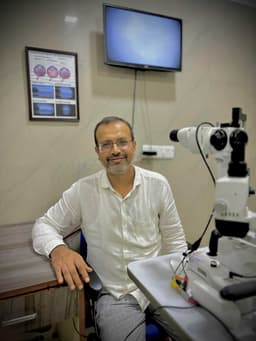
MBBS, MS (Ophthalmology) · Fellowship in Glaucoma, L V Prasad Eye Institute, Hyderabad
Gujarat Medical Council Reg. No. G-12281

MBBS, MS (Ophthalmology), DNB · Fellowship in Cornea & Anterior Segment, L V Prasad Eye Institute, Hyderabad
Gujarat Medical Council Reg. No. G-39262
Book a consultation
2nd Floor, Vinraj Plaza, opp. Government Press, Kothi Road, Anandpura, Vadodara, Gujarat 390001
Mon - Sat, 09:00 AM - 08:00 PM · Sunday closed
Start with a conversation.
Appointments
+91 81400 50055