
In this article
- The full guide
- How is a glasses prescription worked out?
- Glasses or contact lenses: which suits me?
- I want to switch from glasses to contact lenses. What happens?
- Which types of contact lenses are there?
- My contact lenses feel uncomfortable or my eyes get red. What should I do?
- How do I care for contact lenses safely?
- Can children wear contact lenses?
- How often should I update my glasses?
- What does the in-house optical offer?
- Key Takeaways
- Final Thoughts
- Frequently asked questions
- ગુજરાતીમાં
Written by the Mungale Eye Hospital team
Medically reviewed by Dr. Meeta Mungale, MBBS, MS (Ophthalmology), DNB · Fellowship in Cornea & Anterior Segment, L V Prasad Eye Institute, Hyderabad · Gujarat Medical Council Reg. No. G-39262 · Reviewed on 17 November 2026
Published 12 November 2026 · 6 min read
Who this page is for: Glasses and contact lenses prescribed after a full eye check. Choosing between them, switching to lenses, the types available, safe care, and what to do if lenses hurt.
Related on our site: Optical & Contact Lenses
The full guide
A glasses or contact lens prescription is more than a number. When it is worked out during a medical eye examination, the doctor also checks the health of the eye, and a contact lens is checked on the cornea itself. This page explains how that works.
How is a glasses prescription worked out?
Refraction starts with an automated reading, which is then refined by trying lenses while you read a chart. This finds the power for short-sightedness (myopia), long-sightedness (hyperopia), astigmatism and, after about 40, the reading addition for presbyopia. During the same visit, the eye's health can be checked, including pressure and the retina, so changes in vision are not simply put down to glasses. See complete eye examination and glasses not giving clear vision.
Glasses or contact lenses: which suits me?
| Factor | Glasses | Contact lenses |
|---|---|---|
| Ease of use | Simple to put on and take off | Need handling and daily care |
| Field of vision | Frame edges limit side view | Wider, natural field |
| Sports and active work | Can slip or fog | Usually better |
| High power or unequal eyes | Thick lenses, image size differences | Often clearer and more natural |
| Dry eye or allergy | Usually comfortable | May feel uncomfortable |
| Infection risk | Very low | Low with good care; higher with poor care |
Many people use both: lenses for work or sport, and glasses for home and evenings.
I want to switch from glasses to contact lenses. What happens?
- Assessment: your prescription, corneal curve, tear film and eye surface are checked to see which lens type you can tolerate.
- Trial lenses: a trial lens is placed, and its fit and movement are checked on the slit lamp.
- Teaching: you learn to put in, remove and clean the lenses.
- Review: you return after a short trial period, then for regular checks.
Which types of contact lenses are there?
- Soft lenses: daily disposable or monthly, for most prescriptions.
- Toric soft lenses: correct astigmatism.
- Rigid lenses: firmer lenses that give sharp vision, especially for higher astigmatism.
- Cosmetic lenses: change eye colour; they should be fitted after an examination like any other lens.
- Specialty lenses: Rose K, mini scleral and Boston scleral (PROSE) lenses for keratoconus and irregular corneas. See specialty contact lenses.
My contact lenses feel uncomfortable or my eyes get red. What should I do?
Take the lenses out first. Common causes are dryness, a poor fit, deposits on old lenses, overwearing, or the wrong solution. But a red, painful, light-sensitive eye or blurred vision can mean a corneal infection, which needs care the same day. Do not put the lenses back in until an eye doctor has checked you. See corneal ulcer and dry eye.
How do I care for contact lenses safely?
- Wash and dry your hands before handling lenses.
- Follow the replacement schedule; do not stretch monthly lenses.
- Never rinse lenses or cases with tap water, and never top up old solution.
- Do not sleep or swim in lenses unless your doctor has prescribed it.
- Replace the case regularly.
A large Australian study by Stapleton and colleagues (2008) found that sleeping in lenses was one of the strongest risk factors for contact lens infection.
Can children wear contact lenses?
Spectacles suit most children well. Contact lenses can be used in selected cases, usually for medical reasons or specialty fittings, when the child can handle and care for them reliably with a parent's help. Growing children should have their prescription rechecked regularly. Signs a child may need glasses include sitting close to the TV, holding books very near and falling school performance.
How often should I update my glasses?
Most adults benefit from an eye check every one to two years, or sooner if vision changes. Children who wear glasses usually need a recheck more often, because their eyes are still growing. After about 40, near vision tends to shift as presbyopia develops, so reading glasses or progressive lenses may need updating. Replace glasses that are scratched, bent or no longer sit straight, since a poor fit can blur vision and cause headaches. If you notice sudden changes, such as new distortion, flashes or a shadow in your vision, do not wait for a routine visit. These need a prompt eye examination, not a new pair of glasses.
What does the in-house optical offer?
The optical has a range of spectacle frames and prescription lenses, and contact lenses including the specialty types above. Prescriptions for glasses and hard or soft contact lenses are verified on a GL7000 auto lensometer before they are handed over. Optical correction is generally not covered by health insurance.
Key Takeaways
- Prescriptions are worked out during a medical eye examination.
- Glasses and contact lenses each have advantages; many people use both.
- Contact lenses are fitted and checked on the eye.
- Never use tap water or sleep in lenses unless prescribed.
- A red, painful eye with lenses needs same-day care.
Final Thoughts
The right glasses or lenses make everyday life easier, and an eye examination makes sure nothing else is being missed. To book an eye test or contact lens fitting with Dr. Meeta Mungale at Mungale Eye Hospital, Kothi, Vadodara, call or WhatsApp +91 81400 50055, or plan your visit.
Medical Disclaimer: This page is general information. It does not replace an examination of your own eyes.
Frequently asked questions
In short-sightedness (myopia), distant objects look blurred while near objects are clearer, because the eye focuses light in front of the retina. In long-sightedness (hyperopia), near objects are harder to see, and the eye works harder to focus, which can cause tiredness and headaches. Both are corrected with glasses or contact lenses.
Astigmatism means the cornea or lens is curved more in one direction than another, like a rugby ball rather than a football. This makes vision blurred or stretched at all distances. It is very common and is corrected with glasses, toric contact lenses or rigid lenses. High or irregular astigmatism may need a corneal scan.
Presbyopia is the natural loss of near focusing that comes with age, usually noticed in the forties when reading small print becomes harder. It happens to everyone. It is corrected with reading glasses, bifocals, progressive lenses or certain contact lens designs. Your glasses may need updating every few years as it progresses.
It depends on your lifestyle, prescription and eyes. Glasses are simple and low risk. Contact lenses give a wider field of view and suit sports and some high prescriptions, but need careful daily care. Many people use both. An eye examination shows whether your eyes are healthy enough for lenses and which type suits you.
Contact lenses are safe for most people when they are fitted properly and used as advised. The main risk is a corneal infection, which is much more likely with sleeping in lenses, poor hygiene or tap water. Follow your replacement schedule, clean lenses as instructed, and remove them straight away if your eye becomes red or painful.
Yes, in selected cases. Children are usually well served by glasses, but contact lenses may be used for medical reasons, very high or unequal powers, or specialty fittings, provided the child can handle them reliably with a parent's support. A cornea specialist assesses whether lenses are suitable and how often the child should be reviewed.
It is not advisable. Coloured lenses sit on the eye just like corrective lenses, and a poorly fitting lens can scratch or infect the cornea. Have an eye examination and fitting first, buy lenses from a reliable source, follow the care instructions, and never share or swap lenses with friends or family.
ગુજરાતીમાં
ચશ્મા સરળ અને ઓછા જોખમવાળા છે. કોન્ટેક્ટ લેન્સથી બાજુની નજર વધુ મળે છે અને રમતગમતમાં સારું રહે છે, પણ રોજ કાળજી જરૂરી છે. ઘણા લોકો બંને વાપરે છે.
લેન્સ તરત કાઢી નાખો. દુખાવો, પ્રકાશથી તકલીફ કે ઝાંખું દેખાય તો તે જ દિવસે ડૉક્ટરને બતાવો.
Related questions this page covers
- How is a glasses prescription worked out?
- Glasses or contact lenses: which suits me?
- I want to switch from glasses to contact lenses. What happens?
- Which types of contact lenses are there?
- My contact lenses feel uncomfortable or my eyes get red. What should I do?
- How do I care for contact lenses safely?
- Can children wear contact lenses?
- How often should I update my glasses?
- What does the in-house optical offer?
- What is the difference between short-sightedness and long-sightedness?
- What is astigmatism?
- What is presbyopia?
- Should I choose spectacles or contact lenses?
- Are contact lenses safe?
- Can children wear contact lenses?
- Can I buy coloured contact lenses without a prescription?
Author and medical reviewer
Prepared by the Mungale Eye Hospital team. Medically reviewed and approved by Dr. Meeta Mungale, MBBS, MS (Ophthalmology), DNB, Fellowship in Cornea and Anterior Segment (L V Prasad Eye Institute, Hyderabad) · Gujarat Medical Council Reg. No. G-39262 · Last reviewed 17 November 2026
Sources
- Stapleton F, Keay L, Edwards K, et al. The incidence of contact lens-related microbial keratitis in Australia. Ophthalmology. 2008;115(10):1655 to 1662.
- Mungale Eye Hospital website: optical and contact lenses page (reviewed 3 October 2026), lens list, GL7000 lensometer description and Dr. Meeta Mungale's profile.
Reviewed by
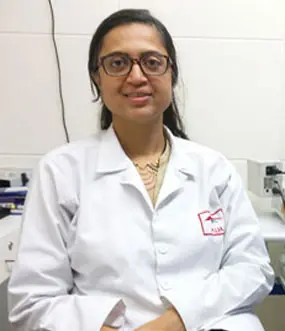
MBBS, MS (Ophthalmology), DNB · Fellowship in Cornea & Anterior Segment, L V Prasad Eye Institute, Hyderabad
Gujarat Medical Council Reg. No. G-39262
Book a consultation
2nd Floor, Vinraj Plaza, opp. Government Press, Kothi Road, Anandpura, Vadodara, Gujarat 390001
Mon - Sat, 09:00 AM - 08:00 PM · Sunday closed
Start with a conversation.
Appointments
+91 81400 50055