
In this article
- The full guide
- What happens during a complete eye examination?
- How is this different from an eye test at a spectacle shop?
- Which extra tests might the doctor add, and why?
- Can one examination tell whether my problem is the cornea, a cataract or eye pressure?
- How often should I have an eye examination?
- Do the dilating drops hurt, and can I drive afterwards?
- How should I prepare?
- Who will examine me?
- Key Takeaways
- Final Thoughts
- Frequently asked questions
- ગુજરાતીમાં
Written by the Mungale Eye Hospital team
Medically reviewed by Dr. Sachin Mungale, MBBS, MS (Ophthalmology) · Fellowship in Glaucoma, L V Prasad Eye Institute, Hyderabad · Gujarat Medical Council Reg. No. G-12281 · Reviewed on 17 November 2026
Published 18 October 2026 · 6 min read
Who this page is for: A step-by-step guide to a complete eye examination in Vadodara: vision, glasses power, eye pressure, cornea, lens, retina and optic nerve, with timing and how often.
Related on our site: Eye Check-Up After 40: Tests, Frequency & Warning Signs
The full guide
A complete eye examination checks the health of the whole eye, not only the glasses number. It looks at vision, focusing power, eye pressure, the front of the eye, and the retina and optic nerve at the back.
What happens during a complete eye examination?
The examination follows a set order, and each step looks for something different.
- History. The doctor asks about your symptoms, past eye problems, diabetes, blood pressure, medicines and family eye disease, because these change what needs checking.
- Vision chart. You read letters at a distance and up close to measure how clearly each eye sees (visual acuity).
- Refraction. A machine reading and a trial of lenses find the exact glasses power that gives the clearest vision.
- Eye pressure (tonometry). A quick reading of the pressure inside the eye that takes a few seconds, one of the main checks for glaucoma.
- Slit-lamp examination. A microscope with a bright light shows the eyelids, the clear front window (cornea) and the natural lens, where cataract forms.
- Dilated examination. Drops widen the pupil so the doctor can see the retina and the optic nerve, where diabetes and glaucoma leave early signs.
- Extra tests, only if needed. If something needs a closer look, the doctor explains which test is added and why.
- Explanation. You hear what was found, get your glasses prescription if needed, and learn when to come back.
These steps follow the American Academy of Ophthalmology's guideline on the adult eye evaluation, updated in 2026.
How is this different from an eye test at a spectacle shop?
A spectacle shop eye test measures the glasses number. A complete examination by an ophthalmologist also checks eye health, which is how glaucoma, cataract and corneal disease are found before they cause symptoms.
| Check | Eye test for glasses | Complete examination by an ophthalmologist |
|---|---|---|
| Vision and glasses number | Yes | Yes |
| Eye pressure | Not usually | Yes |
| Cornea and lens on a slit lamp | Not usually | Yes |
| Retina and optic nerve after dilation | No | Yes |
| Diagnosis and treatment of eye disease | No | Yes |
Which extra tests might the doctor add, and why?
Extra tests are added only when they help answer a question about your eyes. At Mungale Eye Hospital these are done in the hospital.
- Pachymetry: measures corneal thickness, used in glaucoma and corneal assessment. See pachymetry.
- Corneal topography and tomography: maps the shape of the cornea, used for keratoconus and before surgery. See corneal topography and tomography.
- IDRA dry eye analysis: studies the tear film and eyelid oil glands. See dry eye evaluation.
- Visual field test: maps side vision, a key glaucoma test. See glaucoma evaluation.
- OCT scan: a light-based scan of the optic nerve and retina layers.
- Specular microscopy: counts the cells on the inner surface of the cornea, often before cataract surgery.
Can one examination tell whether my problem is the cornea, a cataract or eye pressure?
Usually, yes. Each problem shows up in a different step, so a complete examination often separates them in one visit.
| Problem | Where it usually shows up |
|---|---|
| Corneal problem | Slit-lamp examination, sometimes corneal mapping |
| Cataract | Slit-lamp view of the lens and a drop in vision not fixed by glasses |
| Glaucoma or high pressure | Eye pressure reading and the optic nerve appearance |
Sometimes more than one is present. Read blurred vision getting worse for more.
How often should I have an eye examination?
How often depends on your age and your risk. These intervals come from the American Academy of Ophthalmology for adults without symptoms.
| Who | How often |
|---|---|
| Under 40, no risk factors | Every 5 to 10 years |
| Age 40 | A baseline complete examination |
| 40 to 54 | Every 2 to 4 years |
| 55 to 64 | Every 1 to 3 years |
| 65 and older | Every 1 to 2 years |
| Type 2 diabetes | At diagnosis, then at least once a year |
| Type 1 diabetes | From five years after diagnosis, then yearly |
People with a family history of glaucoma, high eye pressure, contact lens use or an existing eye condition may need checks more often, as their doctor advises. See eye check-up after 40.
Do the dilating drops hurt, and can I drive afterwards?
The drops sting for a few seconds but do not hurt. They blur near vision and make light feel harsh; the American Association for Pediatric Ophthalmology and Strabismus notes this usually lasts from 4 to 24 hours. Do not drive or ride a two-wheeler until your vision is clear, and bring sunglasses.
How should I prepare?
- Bring your current glasses, and contact lenses with their case.
- Bring earlier prescriptions and eye reports.
- Bring a list of all medicines and eye drops, and recent sugar or blood pressure reports.
- If you wear contact lenses, ask when you book whether to leave them out before the visit.
- Come with a family member if you are elderly or have far to travel.
Who will examine me?
A trained team does the vision and pressure measurements, and an ophthalmologist examines your eyes and explains the results. At Mungale Eye Hospital, Dr. Sachin Mungale, glaucoma specialist, and Dr. Meeta Mungale, cornea specialist, see patients. If a problem needs the other doctor, they review it together.
Key Takeaways
- A complete examination checks eye health, not only the glasses number.
- It includes eye pressure, a slit-lamp examination and a dilated look at the retina and optic nerve.
- Adults should have a baseline examination at 40, then checks every one to four years by age.
- Plan for one to three hours if dilating drops are used, and do not drive afterwards.
Final Thoughts
Many eye diseases cause no symptoms early, so a complete examination at the right interval protects sight. To book one at Mungale Eye Hospital, Kothi, Vadodara, call or WhatsApp +91 81400 50055, or plan your visit.
Medical Disclaimer: This page is general information. It does not replace an examination of your own eyes.
Frequently asked questions
A complete eye examination usually takes about an hour without dilating drops. With dilation, or if the doctor adds tests such as a visual field or an OCT scan, plan for two to three hours. The drops need some time to work, and the doctor examines the retina and optic nerve only once the pupils have widened.
No. Eye pressure is measured in a few seconds. Some methods use a numbing drop and a gentle touch on the cornea; others use a small probe or a puff of air. You may feel a light touch or a brief blink reflex, but there is no pain, and you can see normally straight afterwards.
Yes, in most cases. The glasses power is measured during the examination, and the doctor gives you the prescription at the end of the visit. If your eyes were dilated, or the doctor wants to recheck the number after treating dry eye or another problem, a final prescription may be given at a follow-up visit instead.
Tell the doctor about any change in vision, glare, eye pain, redness or watering, and when your last test was. Mention diabetes, blood pressure, thyroid problems, steroid use, past eye injuries or surgery, and any family member with glaucoma. Bring your old glasses even if you stopped wearing them, as they help compare.
For a routine check, you can usually wear your lenses to the hospital and remove them when asked. For some corneal tests, the doctor may ask you to leave soft or rigid lenses out for a few days first, because lenses can change the corneal shape. Ask when you book so the right advice is given.
Many health insurance policies do not cover outpatient eye check-ups, though some include a yearly health check that may count. Coverage depends entirely on your policy. Check with your insurer before the visit, and ask the hospital's insurance desk if you are unsure what your policy includes.
ગુજરાતીમાં
આંખની સંપૂર્ણ તપાસમાં નજર, ચશ્માના નંબર, આંખનું પ્રેશર, સ્લિટ લેમ્પથી કોર્નિયા અને લેન્સ, અને ટીપાં નાખીને રેટિના તથા ઓપ્ટિક નર્વની તપાસ થાય છે. ટીપાં સાથે એકથી ત્રણ કલાક લાગી શકે છે. 40 વર્ષની ઉંમરે એક વાર પૂરી તપાસ કરાવો.
ચશ્માની દુકાનમાં ફક્ત નંબર તપાસાય છે. આંખના ડૉક્ટરની તપાસમાં પ્રેશર, કોર્નિયા, મોતિયો અને રેટિના પણ જોવાય છે, જેથી ઝામર જેવી બીમારી વહેલી પકડાય.
Related questions this page covers
- What happens during a complete eye examination?
- How is this different from an eye test at a spectacle shop?
- Which extra tests might the doctor add, and why?
- Can one examination tell whether my problem is the cornea, a cataract or eye pressure?
- How often should I have an eye examination?
- Do the dilating drops hurt, and can I drive afterwards?
- How should I prepare?
- Who will examine me?
- How long does a full eye check-up take?
- Is the eye pressure test painful?
- Will I get my glasses prescription the same day?
- I have not had an eye test in years. What should I tell the doctor?
- Do I need to stop wearing contact lenses before an eye examination?
- Is a complete eye examination covered by insurance?
Author and medical reviewer
Prepared by the Mungale Eye Hospital team. Medically reviewed and approved by Dr. Sachin Mungale, MBBS, MS (Ophthalmology), Fellowship in Glaucoma (L V Prasad Eye Institute, Hyderabad), Gujarat Medical Council Reg. No. G-12281 · Last reviewed 17 November 2026
Sources
- American Academy of Ophthalmology. Comprehensive Adult Medical Eye Evaluation Preferred Practice Pattern, 2026 update (intervals unchanged from 2021), as summarised by Review of Optometry.
- American Academy of Ophthalmology. Frequency of Ocular Examinations, clinical statement. aao.org/clinical-statement/frequency-of-ocular-examinations
- American Association for Pediatric Ophthalmology and Strabismus. Dilating Eye Drops, patient glossary. aapos.org/glossary/dilating-eye-drops
- Mungale Eye Hospital website: treatments hub, cornea evaluation and glaucoma evaluation pages (checked 14 November 2026), for tests done at the hospital.
Reviewed by
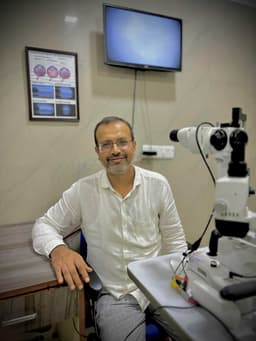
MBBS, MS (Ophthalmology) · Fellowship in Glaucoma, L V Prasad Eye Institute, Hyderabad
Gujarat Medical Council Reg. No. G-12281
Book a consultation
2nd Floor, Vinraj Plaza, opp. Government Press, Kothi Road, Anandpura, Vadodara, Gujarat 390001
Mon - Sat, 09:00 AM - 08:00 PM · Sunday closed
Start with a conversation.
Appointments
+91 81400 50055