
Medically reviewed by Dr. Meeta Mungale, MS (Ophthalmology), DNB · Cornea Fellowship, LVPEI · Gujarat Medical Council Reg. No. G-39262 · Reviewed on 3 October 2026
Published 24 September 2025 · Updated 24 September 2025
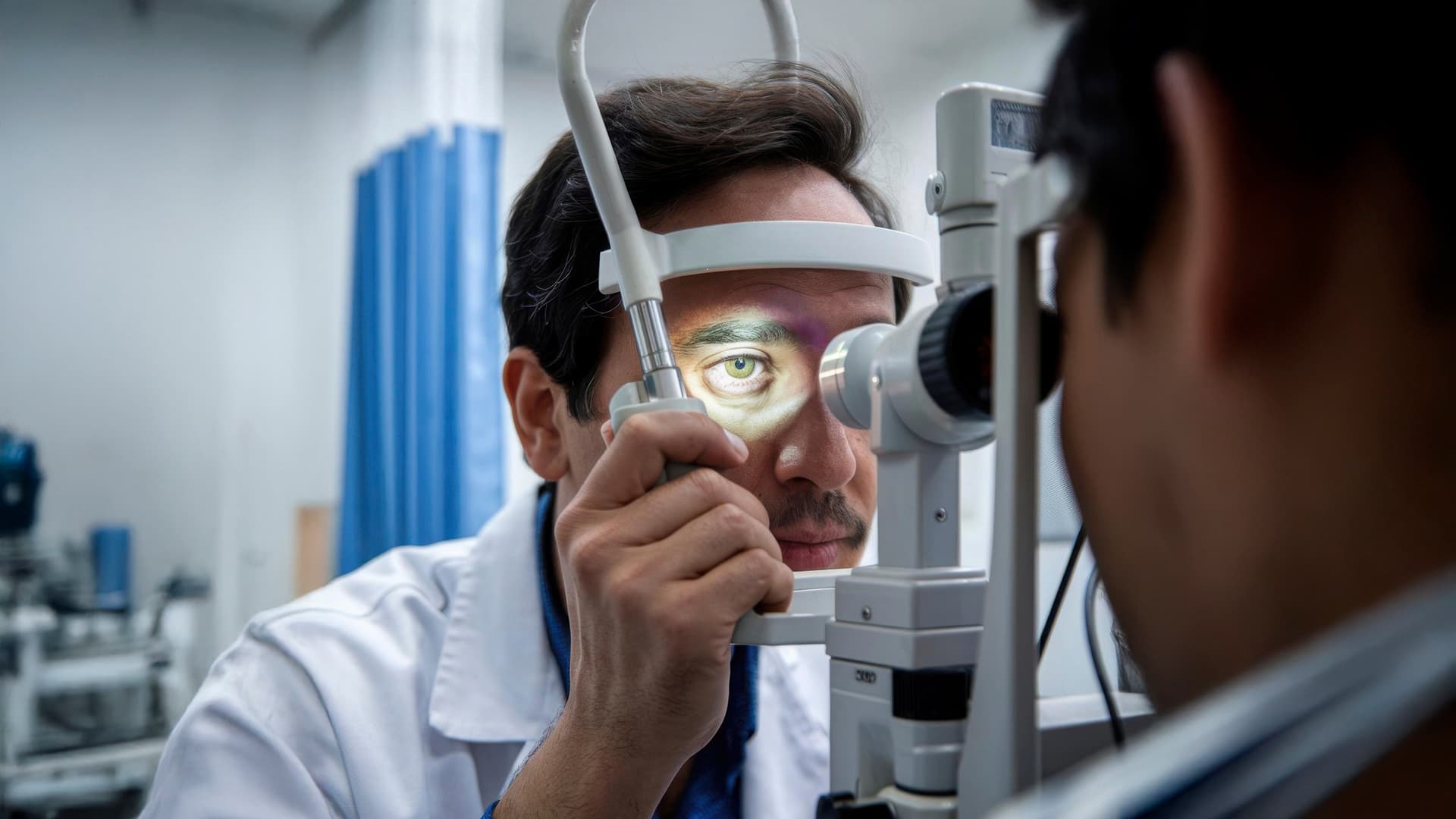
Imagine trying to look through a window that has slowly fogged up over time. You can still make out shapes, but the details are gone. That is often how patients describe the early stages of corneal disease. The cornea our eye’s clear front surface may be tiny, but when it loses its transparency, every part of daily life feels different: reading, driving, even recognising a familiar face.
This article is not a medical textbook. Think of it as a guide you might hear from your trusted eye doctor- straightforward, practical, and focused on what really matters. Careful evaluation before a corneal transplant is important, which diseases to watch out for, when a transplant becomes necessary, and how modern surgeries and careful follow-up can restore confidence in your sight.
Corneal Transplant Care at Mungale Eye Hospital
Why Early Cornea Evaluation Matters
One of the most common things patients say after finally coming in for a check-up is: “I wish I had come earlier.” Corneal problems often start quietly. At first, the patients might notice a morning blur, which takes a few hours to clear up.
An evaluation gives your doctor the chance to catch these subtle changes. It usually involves:
Looking at the cornea under a microscope to check for scars or swelling.
Scanning its shape (tomography) to pick up early keratoconus.
Measuring thickness (pachymetry), because thinning or swelling can hint at disease.
Assessing the inner cell layer (specular microscopy), which quietly keeps the cornea clear.
When caught early, many problems can be slowed down with simple treatments, avoiding surgery altogether.
Common Corneal Diseases that can be diagnosed at Mungale Eye Hospital
Every day in clinics, four issues show up again and again:
Keratoconus. The cornea becomes thinner and bulges forward. The patients might notice a morning blur, which takes a few hours to clear up. Special lenses or cross-linking can help, but in advanced stages, a transplant may be the only way forward.
Fuchs’ dystrophy. This condition creeps up over the years. People wake up with blurred vision that slowly clears during the day. Early on, salt drops and careful monitoring are enough. Later, surgery becomes necessary.
Infections. A scratch, an unclean lens, or even swimming with contact lenses can trigger a corneal ulcer. Pain, redness, and sudden vision loss make this an emergency—delays can mean permanent scarring.
Pterygium. Often seen in people who spend years under the sun, it appears as a small triangular growth. Sometimes it’s harmless; sometimes it grows into the line of sight and has to be removed.
The details differ, but the golden rule is the same: early attention means simpler treatment.
When can you visit Eye Hospital for a Corneal Transplant
No one is rushed into transplant surgery. Doctors turn to it only when vision is badly affected or the cornea is no longer healthy enough to keep the eye comfortable.
Signs that a transplant may be the next step include:
Advances in Surgery
If you think a corneal transplant means months of bandages and bed rest, think again. Over the last two decades, techniques have become far more refined.
The result? Patients get back to their normal routines sooner, with a clearer window to the world.
Life after getting a transplant at our eye hospital for a corneal transplant
Surgery is just the beginning. Recovery is where patients and doctors work together.
The first weeks involve eye drops and frequent visits. Your doctor will remind you of the “RSVP” warning signs:
Spotting these early can prevent rejection. Most patients notice vision improving gradually. For some, the change is life-altering—being able to read again, to drive confidently, to see faces clearly. Others may still need glasses, but the improvement in clarity is significant.
Follow-up is not a formality. Even years after surgery, check-ups are crucial to keep the graft healthy.