
Written by the Mungale Eye Hospital team
Medically reviewed by Dr. Meeta Mungale, MBBS, MS (Ophthalmology), DNB · Fellowship in Cornea & Anterior Segment, L V Prasad Eye Institute, Hyderabad · Gujarat Medical Council Reg. No. G-39262 · Reviewed on 14 October 2026
Published 14 October 2026
Part of our guide: Corneal Ulcer & Keratitis: Symptoms & Treatment
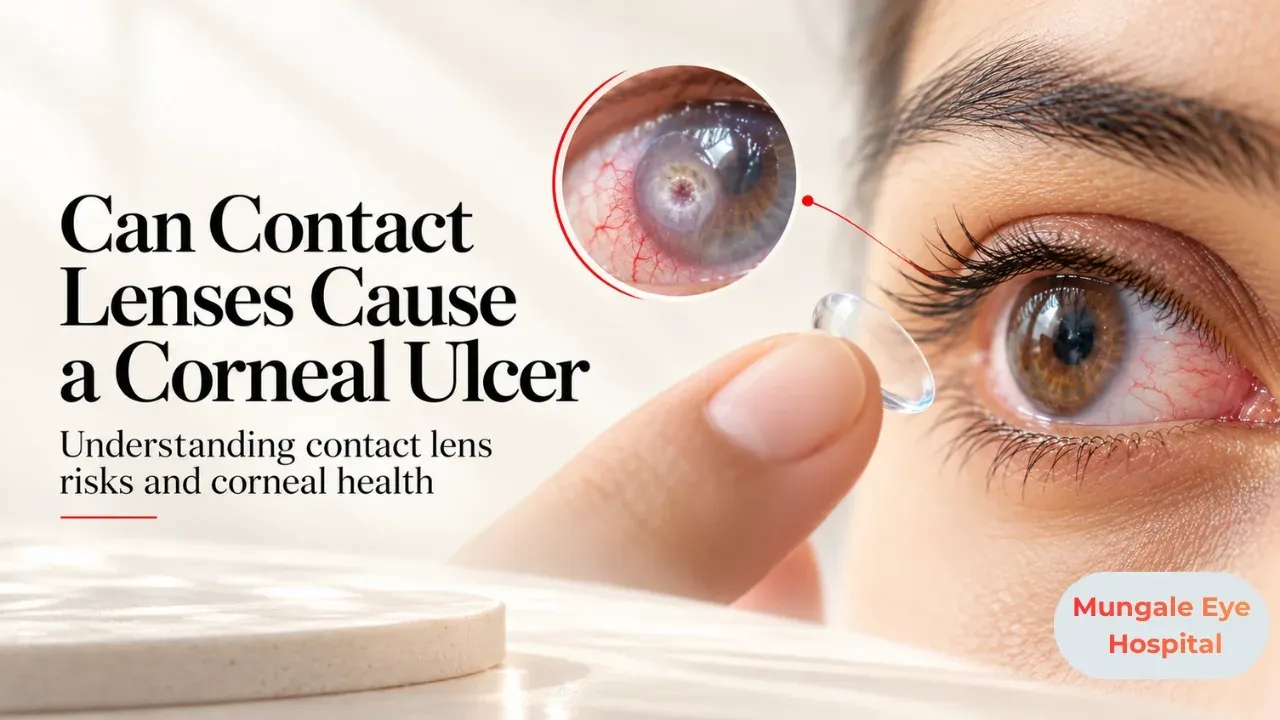
Yes. Contact lenses are one of the most common causes of corneal ulcers in healthy people, but the risk comes mainly from how lenses are used, not from the lenses themselves. Sleeping in lenses, poor cleaning and contact with water greatly increase the risk. With good habits, most people wear lenses safely for years.
Why Do Lenses Raise the Risk?
A contact lens sits directly on the cornea. It reduces oxygen supply and can cause tiny scratches. If bacteria, fungi or Acanthamoeba are present on the lens or in the case, they can enter through these weak spots and cause infection.
Which Habits Are Most Risky?
What Are the Warning Signs?
Do not wait. Remove the lenses, keep them and the case, and see an eye doctor. The lens and case can be tested to find the germ.
Safe Contact Lens Rules
Hygiene
Wash and dry your hands before touching lenses. Keep nails short and clean.
Solution and case
Use fresh multipurpose solution every time. Rub and rinse lenses as advised. Air-dry the case upside down and replace it regularly.
Wear time
Follow the replacement schedule: daily, two-weekly or monthly. Do not sleep in lenses unless your doctor approves a specific type.
Water
Keep all water away from lenses, including tap water, swimming pools and showers.
Check-ups
Have a yearly eye exam even if your eyes feel fine. Your doctor can spot early problems.
Are Daily Disposable Lenses Safer?
Daily disposables reduce the risks from lens cases and cleaning, so many eye doctors prefer them for occasional wearers. They are safe only when used as intended, meaning one pair per day, never reused.
Key Takeaways
Final Thoughts
Contact lenses offer freedom and comfort, but they need respect and routine. A few simple rules can prevent a painful, sight-threatening infection. For lens fitting advice or an urgent check, you can consult Dr. Meeta Mungale, an ophthalmologist at Mungale Eye Hospital in Vadodara.
Frequently Asked Questions
Most lenses are not designed for overnight wear. Sleeping in them reduces oxygen and greatly raises infection risk. Even with lenses approved for extended wear, ask your eye doctor before sleeping in them.
No. Tap water can contain Acanthamoeba and other germs that cause serious corneal infections. Always use fresh contact lens solution to clean, rinse and store lenses and the case.
Remove the lenses at once. If pain, redness or blurred vision continue, see an eye doctor the same day. Bring your lenses and case, as they may help identify the cause of infection.
They can be safe if prescribed and fitted by an eye doctor and cared for properly. Lenses bought without a prescription, from markets or online sellers, carry a higher risk of injury and infection.
Replace the case at least every 1 to 3 months, or as advised. Clean it with solution, never water, and let it air-dry upside down. An old case can collect germs even if it looks clean.
Some people with mild dry eye can wear lenses with the right type and care plan. Others may find them uncomfortable. An eye exam helps decide whether lenses suit you.
Sources and further reading
Reviewed by

MBBS, MS (Ophthalmology), DNB · Fellowship in Cornea & Anterior Segment, L V Prasad Eye Institute, Hyderabad
Gujarat Medical Council Reg. No. G-39262
Book a consultation
2nd Floor, Vinraj Plaza, opp. Government Press, Kothi Road, Anandpura, Vadodara, Gujarat 390001
Mon - Sat, 09:00 AM - 08:00 PM · Sunday closed
Related Articles
Start with a conversation.
Appointments
+91 81400 50055