
Medically reviewed by Dr. Sachin Mungale, MS (Ophthalmology) · Glaucoma Fellowship, LVPEI · Gujarat Medical Council Reg. No. G-12281 and Dr. Meeta Mungale, MS (Ophthalmology), DNB · Cornea Fellowship, LVPEI · Gujarat Medical Council Reg. No. G-39262 · Reviewed on 3 October 2026
Published 14 May 2026 · Updated 14 May 2026
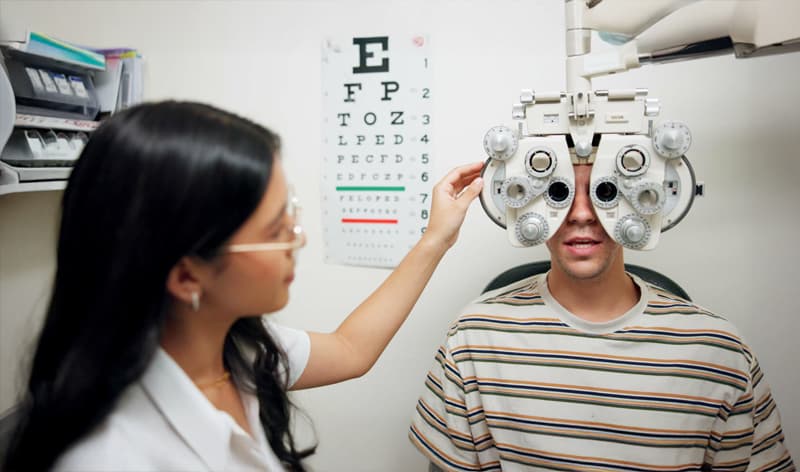
A thorough routine eye examination is a comprehensive evaluation because it tests both visual acuity and physical eye structures to detect underlying conditions early . A routine eye examination involves a step-by-step breakdown starting with patient history, followed by visual acuity tests, refraction assessments using a phoropter, and intraocular pressure measurements with a tonometer. This process screens for refractive errors and specific eye diseases like glaucoma and macular degeneration, typically requiring 30 to 45 minutes to complete.
What Happens During A Routine Eye examination?
A step-by-step breakdown of what happens during a routine eye check-up begins with a medical history review and visual acuity testing using a Snellen chart. Optometrists measure refractive error by explaining the different machines used in an eye exam like the phoropter and tonometer. The phoropter determines the exact lens prescription needed for corrective eyewear by switching multiple lenses in front of the eyes to isolate the clearest focal point. The tonometer measures intraocular pressure by releasing a brief puff of air onto the cornea. Patients frequently ask, are the tests during an eye exam uncomfortable or painful? These diagnostic procedures are entirely non-invasive and comfortable, designed strictly to measure eye function and fluid pressure without direct contact.
What Is The Difference Between A Vision Screening And A Full Eye Examination?
A vision screening is a brief test that only checks basic distance vision, whereas a comprehensive eye examination evaluates the complete physical health of the eye and internal neurological function. Understanding what is the difference between a vision screening and a full eye examination ensures patients do not mistake a basic school or DMV eye check for a thorough medical diagnostic .
| Service Type | Estimated Price (INR) | Key Feature | Best For | Diagnostic Rating |
|---|---|---|---|---|
| Vision Screening | 0 – 1,500 | Basic visual acuity check (Snellen chart) | School children, DMV license renewals | 2/5 |
| Comprehensive Eye Examination | 7,500 – 18,000 | Full structural health and refraction testing | Annual health checks, detecting eye diseases | 5/5 |
Mid-Article CTA: To ensure accurate detection of ocular conditions, schedule a comprehensive eye examination with a certified optometrist annually.
What Specific Eye Diseases Are Doctors Screening For During A Check-Up?
A comprehensive examination evaluates the retina, optic nerve, and blood vessels to detect systemic and localized conditions. When patients ask what specific eye diseases are doctors screening for during a check-up, the primary targets include glaucoma, cataracts, and diabetic retinopathy. Doctors screen for glaucoma by monitoring intraocular pressure and optic nerve damage. Diabetic retinopathy is identified by examining the retinal blood vessels for leaks or swelling. Age-related macular degeneration is detected by evaluating the macula for drusen deposits, while cataracts are diagnosed by observing the opacity of the eye’s natural crystalline lens.
Who Should Schedule A Comprehensive Eye Exam And Who Can Skip It?
Adults over the age of 40 must schedule an annual comprehensi`ve eye examination to monitor for age-related vision changes like presbyopia. Individuals with a family history of glaucoma, diabetes, or hypertension require yearly evaluations regardless of age. Children should receive their first comprehensive exam at 6 months, followed by exams at age 3 and before starting school. Healthy adults between 20 and 39 with no visual symptoms, eye strain, or corrective lenses can skip annual exams and instead undergo evaluations every two to three years.
How Should I Prepare For A Comprehensive Eye Exam?
Patients preparing for an evaluation must bring their current prescription eyeglasses or contact lenses, a list of current medications, and their medical insurance information. Knowing how should I prepare for a comprehensive eye exam ensures the optometrist has accurate baseline data to track vision degradation over time. Patients must also arrange transportation if dilation is scheduled. Understanding what to expect after getting your pupils dilated at an eye test prevents safety risks; vision remains blurry and highly sensitive to light for 4 to 6 hours, making driving hazardous.
Where To Book An Eye Test In Vadodara And What Does It Cost?
Patients seeking an eye test in Vadodara, Gujarat, India, can expect costs ranging from ₹500 to ₹2,000 depending on the facility’s diagnostic equipment. When evaluating an eye care hospital in Vadodara , verify that the clinic utilizes digital phoropters and non-contact tonometers. For advanced eye care in Vadodara, patients typically consult an eye specialist Vadodara who provides full retinal imaging and dilation services. Facilities like Mungale Eye Hospital in Vadodara, Gujarat, offer these standardized diagnostic protocols. Selecting an experienced eye doctor in Vadodara supports accurate prescriptions and early disease detection.
Next Step: Review your medical insurance coverage and document any recent vision changes before booking your next appointment with a local eye clinic Vadodara.
Frequently Asked Questions
A standard eye examination costs between ₹7,500 and ₹18,000 without insurance. Patients with vision insurance typically pay a copay ranging from ₹750 to ₹3,750. Specialized diagnostic tests like retinal imaging may add ₹2,250 to ₹3,750 to the total out-of-pocket expense.
Patients must provide a complete medical history, a list of current medications, and any previous corrective lens prescriptions prior to the exam. Clinics require this baseline data to calibrate diagnostic equipment like the phoropter and accurately measure refractive changes.
A non-contact tonometer emits a rapid, gentle puff of air onto the cornea. The machine calculates intraocular pressure by measuring the eye s physical resistance to the air puff. This specific measurement identifies potential fluid buildup and risks for glaucoma.
A standard examination requires 30 to 45 minutes from start to finish. If the optometrist dilates the pupils for a deeper retinal evaluation, the appointment extends by 15 to 30 minutes to allow the dilating drops to take full effect.
Driving after pupil dilation is highly discouraged. Dilating drops cause light sensitivity and blurred near vision that lasts for 4 to 6 hours. Patients must wear protective sunglasses and arrange for alternative transportation to ensure safety.
Vision screenings only measure basic visual acuity and cannot diagnose structural eye diseases. They do not replace a full evaluation, which assesses internal ocular health, muscle coordination, and specific conditions like macular degeneration or diabetic retinopathy.