
In this article
- The full guide
- Can glaucoma be cured?
- How often will I need check-ups?
- What should I bring when I change eye doctors?
- How do doctors know if glaucoma is getting worse?
- When should I ask for a second opinion?
- How does a second opinion work at Mungale Eye Hospital?
- What if my pressure is normal but tests are still worsening?
- What about cataract or other eye problems alongside glaucoma?
- Living with glaucoma
- Key Takeaways
- Final Thoughts
- Frequently asked questions
- ગુજરાતીમાં
Written by the Mungale Eye Hospital team
Medically reviewed by Dr. Sachin Mungale, MBBS, MS (Ophthalmology) · Fellowship in Glaucoma, L V Prasad Eye Institute, Hyderabad · Gujarat Medical Council Reg. No. G-12281 · Reviewed on 17 November 2026
Published 8 November 2026 · 6 min read
Who this page is for: Glaucoma is a lifelong condition, and continuity of care matters. How often to be checked, what to bring when you change doctors, and when a second opinion helps.
Related on our site: Can Glaucoma Be Cured? What Treatment Can and Cannot Restore
The full guide
Glaucoma is usually a lifelong condition. If you have moved to Vadodara, your doctor has retired, or you simply want to be sure your treatment is right, the most important thing is continuity: tests compared over years rather than a single visit.
Can glaucoma be cured?
No. Glaucoma damages the fibres of the optic nerve, and those fibres do not grow back, so lost vision cannot be restored. But glaucoma can be controlled. Lowering eye pressure slows or stops further damage in most people, as the Early Manifest Glaucoma Trial showed. With regular treatment and follow-up, most people with glaucoma keep useful vision for life. That is why follow-up never really ends. See glaucoma treatments.
How often will I need check-ups?
| Your situation | Typical follow-up |
|---|---|
| Newly diagnosed or treatment just changed | Every few weeks to three months |
| First two years after diagnosis | Visual fields several times, to measure the rate of change |
| Stable, pressure at target | Every six to twelve months |
| Worsening on tests, or pressure above target | Sooner, often every one to three months |
| After laser or surgery | Closely in the first weeks, then as advised |
These follow the approach of the European Glaucoma Society guidelines. Your specialist adjusts the schedule to you.
What should I bring when I change eye doctors?
- All previous visual field printouts, ideally the full series rather than only the latest
- OCT reports of the optic nerve
- Pressure readings and, if known, the pressure when glaucoma was first found
- Corneal thickness (pachymetry) results
- Every glaucoma drop you use now or have used, with dates and any side effects
- Laser or surgery notes and discharge summaries
- A list of other medicines, especially steroids, and general health conditions
Old reports let your new doctor see the trend from day one, which can save months of repeated testing.
How do doctors know if glaucoma is getting worse?
Glaucoma usually changes slowly, so doctors look at trends over several tests rather than one result. Progression analysis software on the visual field analyser compares each field with your earlier ones, and OCT tracks the thickness of the nerve fibre layer. If both show a steady loss, or pressure stays above target, treatment is usually stepped up. If tests are stable, the plan is working. See glaucoma evaluation.
When should I ask for a second opinion?
A second opinion is a normal part of good care, and most doctors welcome it. It can help when:
- Pressure stays high despite several drops
- Side effects make drops hard to continue
- Surgery has been advised and you want to understand your options
- Your fields or OCT appear to be worsening
- You have been newly diagnosed and want confirmation
How does a second opinion work at Mungale Eye Hospital?
Dr. Sachin Mungale reviews your previous reports, examines your eyes and repeats tests where needed, such as a fresh visual field or OCT, to compare with your earlier results. He then explains his findings and recommendations, and can share a written summary with you and, with your permission, your current doctor. Bring all your reports to the visit, including those from other cities or hospitals.
What if my pressure is normal but tests are still worsening?
This happens to some people. Every optic nerve has its own safe level, and for some eyes a pressure in the normal range is still too high. Others have normal-tension glaucoma, where damage occurs without raised pressure. If fields or OCT keep worsening, your specialist may lower the target, check pressure at different times of day, look for other contributing factors such as low blood pressure at night, and adjust treatment.
What about cataract or other eye problems alongside glaucoma?
Cataract is common in people with glaucoma and can make field tests look worse than the nerve really is. Cataract surgery can be planned with your glaucoma in mind, and sometimes combined with a glaucoma procedure. Diabetes and other conditions also need regular eye checks. Having one hospital see all your eye problems helps keep the plan joined up. See cataract surgery.
Living with glaucoma
- Make drops a habit: link them to daily routines, and set phone reminders.
- Travelling: carry drops in your hand luggage with a copy of your prescription, and keep them away from heat.
- Other medicines: tell every doctor you have glaucoma, as steroids and some other medicines can raise eye pressure or affect narrow angles.
- Driving: ask your eye doctor whether your visual field is safe for driving.
- Family: brothers, sisters and children should be checked. See glaucoma in the family.
Key Takeaways
- Glaucoma is controlled, not reversed, so follow-up is lifelong.
- Bring every old field, OCT and drop record when you change doctors.
- Progression is judged on trends across several tests.
- A second opinion is a normal, respectful part of care.
Final Thoughts
Glaucoma care is a steady, long-term partnership. To continue your care or get a second opinion with Dr. Sachin Mungale at Mungale Eye Hospital, Kothi, Vadodara, call or WhatsApp +91 81400 50055, or plan your visit.
Medical Disclaimer: This page is general information. It does not replace an examination of your own eyes.
Frequently asked questions
Yes. Many people change doctors because they move, their doctor retires or they want a second opinion. Keep using your drops exactly as prescribed until your new doctor has examined you, and bring all your old reports and drop bottles. Your previous results help the new doctor continue care without losing track of changes.
Not always. Recent, good-quality reports can often be used, but some tests, such as eye pressure, are always repeated at a visit. A fresh visual field and OCT are often done to create a new baseline on the hospital's machines, which makes future comparisons more reliable. Your specialist decides what is needed.
Restart them as soon as you remember, at your usual times, and do not use double doses. Missing drops for a few days can let pressure rise. If you miss drops often, tell your doctor, who may simplify your routine, change to a once-daily drop or discuss laser. Regular use matters more than perfect timing.
Yes. Carry your drops in hand luggage with a copy of your prescription, as airlines usually allow small medicine bottles. Keep them away from heat and direct sun, and pack an extra bottle for long trips. Set reminders in your new time zone so you keep to roughly the same gaps between doses.
Most people with glaucoma who are diagnosed and treated keep useful vision for life. The risk of serious vision loss is higher when glaucoma is found late or treatment is not used regularly. Taking drops as prescribed and keeping follow-up visits, so treatment can be adjusted when tests change, gives you the strongest protection.
Many people with glaucoma drive safely. Driving depends on your central vision and how much side vision you have left, which the visual field test shows. Your eye doctor can tell you whether your fields are adequate. Driving licence rules in India include vision standards, so ask your doctor if a certificate is needed.
ગુજરાતીમાં
ના. ઝામરથી ગયેલી નજર પાછી આવતી નથી, પણ નિયમિત સારવાર અને તપાસથી ઝામરને કાબૂમાં રાખી શકાય છે. મોટા ભાગના લોકો જીવનભર ઉપયોગી નજર જાળવી રાખે છે.
જૂના વિઝ્યુઅલ ફીલ્ડ અને OCT રિપોર્ટ, પ્રેશરની નોંધ, વપરાતાં બધાં ટીપાં અને ઓપરેશનના કાગળો સાથે લાવો.
Related questions this page covers
- Can glaucoma be cured?
- How often will I need check-ups?
- What should I bring when I change eye doctors?
- How do doctors know if glaucoma is getting worse?
- When should I ask for a second opinion?
- How does a second opinion work at Mungale Eye Hospital?
- What if my pressure is normal but tests are still worsening?
- What about cataract or other eye problems alongside glaucoma?
- Can I switch my glaucoma doctor mid-treatment?
- Do I have to repeat all the glaucoma tests?
- What if I miss my glaucoma drops for a few days?
- Can I travel with glaucoma drops?
- Will I go blind from glaucoma?
- Can I drive with glaucoma?
Author and medical reviewer
Prepared by the Mungale Eye Hospital team. Medically reviewed and approved by Dr. Sachin Mungale, MBBS, MS (Ophthalmology), Glaucoma Fellowship (L V Prasad Eye Institute, Hyderabad) · Gujarat Medical Council Reg. No. G-12281 · Last reviewed 17 November 2026
Sources
- Heijl A, Leske MC, Bengtsson B, et al. Reduction of intraocular pressure and glaucoma progression: results from the Early Manifest Glaucoma Trial. Arch Ophthalmol. 2002;120(10):1268 to 1279.
- European Glaucoma Society. Terminology and Guidelines for Glaucoma, 5th Edition. Br J Ophthalmol. 2021;105(Suppl 1):1 to 169.
- Mungale Eye Hospital website: "Can glaucoma be cured?" post (4 October 2026) and Dr. Sachin Mungale's profile.
Reviewed by
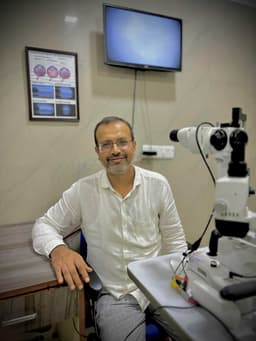
MBBS, MS (Ophthalmology) · Fellowship in Glaucoma, L V Prasad Eye Institute, Hyderabad
Gujarat Medical Council Reg. No. G-12281
Book a consultation
2nd Floor, Vinraj Plaza, opp. Government Press, Kothi Road, Anandpura, Vadodara, Gujarat 390001
Mon - Sat, 09:00 AM - 08:00 PM · Sunday closed
Start with a conversation.
Appointments
+91 81400 50055