
In this article
- The full guide
- What is pachymetry?
- Why has my doctor asked for a pachymetry test?
- What is a normal corneal thickness?
- How does corneal thickness affect my eye pressure reading?
- How is the test done, and does it hurt?
- Where can I get pachymetry done in Vadodara?
- What happens after the test?
- Key Takeaways
- Final Thoughts
- Frequently asked questions
- ગુજરાતીમાં
Written by the Mungale Eye Hospital team
Medically reviewed by Dr. Meeta Mungale, MBBS, MS (Ophthalmology), DNB · Fellowship in Cornea & Anterior Segment, L V Prasad Eye Institute, Hyderabad · Gujarat Medical Council Reg. No. G-39262 and Dr. Sachin Mungale, MBBS, MS (Ophthalmology) · Fellowship in Glaucoma, L V Prasad Eye Institute, Hyderabad · Gujarat Medical Council Reg. No. G-12281 · Reviewed on 17 November 2026
Published 24 October 2026 · 6 min read
Who this page is for: Pachymetry measures corneal thickness in microns. Why your doctor ordered it, what the number means for eye pressure and keratoconus, and how it is done in Vadodara.
Related on our site: Cornea Evaluation
The full guide
Pachymetry is a quick test that measures how thick your cornea is, the clear front window of the eye. The result is a number in microns, and doctors use it for four main reasons: glaucoma, keratoconus, laser vision surgery and corneal swelling.
What is pachymetry?
Pachymetry is the measurement of corneal thickness. The result is given in microns (µm); one micron is a thousandth of a millimetre, so a typical cornea is a little over half a millimetre thick.
There are two ways to measure it. Ultrasound pachymetry uses a small probe that touches the numbed cornea for a moment. Optical pachymetry uses light, without touching the eye, and is part of corneal imaging such as tomography, which also maps thickness across the whole cornea. The thickness at the centre is called central corneal thickness, or CCT.
Why has my doctor asked for a pachymetry test?
Pachymetry is ordered to answer one of four questions.
To read eye pressure correctly in glaucoma. The usual pressure test presses lightly on the cornea, so the cornea's thickness affects the reading. A thin cornea can make pressure look lower than it really is, and a thick one can make it look higher. See high eye pressure with normal vision.
To look for keratoconus. In keratoconus the cornea thins, often more in one area. Thinning, together with a change in shape on corneal maps, helps confirm it and track change. See keratoconus.
Before laser vision surgery. Laser procedures remove corneal tissue, so enough thickness must remain afterwards. A thin cornea can make laser surgery unsuitable.
To check for corneal swelling. When the inner cell layer of the cornea is weak, water builds up and the cornea becomes thicker. Thickness is measured before and after treatment, including before and after a corneal transplant. See corneal transplant.
What is a normal corneal thickness?
There is no single normal number, because healthy corneas vary from person to person. Published studies give a sense of the typical range.
| What the studies found | Value | Source |
|---|---|---|
| Average central thickness in normal eyes | About 534 µm | Doughty and Zaman, Survey of Ophthalmology, 2000 (review of 300 data sets) |
| Average central thickness in people with raised eye pressure | 573 µm, with most people within about 40 µm either side | Ocular Hypertension Treatment Study, Ophthalmology, 2001 |
| Share of that group with corneas over 600 µm | About 24 percent | Ocular Hypertension Treatment Study, 2001 |
| Your result | What it may mean | What happens next |
|---|---|---|
| Thinner than average | A pressure reading may be underestimated; may be part of keratoconus | The doctor reads it with your pressure, optic nerve and corneal maps |
| Around average | Pressure readings are taken at face value | Other tests guide the plan |
| Thicker than average | A pressure reading may be overestimated; can also mean corneal swelling | The doctor checks the inner corneal cells and the pressure together |
A thin or thick reading alone is not a diagnosis. The doctor always reads it alongside your other results.
How does corneal thickness affect my eye pressure reading?
Thickness changes how the cornea responds when the pressure is measured. The Ocular Hypertension Treatment Study found that corneal thickness influences the pressure reading and may affect the accuracy of the standard test. The same study, reported in Archives of Ophthalmology in 2002, found that a thinner central cornea was a strong predictor of who went on to develop glaucoma among people with raised eye pressure.
This is why Dr. Sachin Mungale, glaucoma specialist, measures corneal thickness as part of a glaucoma evaluation. It helps decide whether a raised reading needs treatment or regular watching.
How is the test done, and does it hurt?
The test is quick and does not hurt.
- For ultrasound pachymetry, a numbing drop is put in the eye.
- You look straight ahead while the small probe touches the centre of the cornea for a second or two.
- Several readings are taken from each eye and averaged.
- For optical measurement, you rest your chin on the instrument and look at a light; nothing touches the eye.
The measurement itself takes about a minute. The numbing drop wears off within a short time; avoid rubbing your eyes until it does.
Where can I get pachymetry done in Vadodara?
At Mungale Eye Hospital, Kothi Road, Vadodara, pachymetry is done in the hospital with a Tomey SP-100 handheld pachymeter, and corneal thickness is also measured as part of ANTERION tomography. Pachymetry is usually done as part of a cornea evaluation or a glaucoma evaluation, so the doctor can read the number with your other results. If another doctor has asked for the test, bring their note.
What happens after the test?
Pachymetry is rarely the only test. The doctor reads your thickness together with eye pressure, the optic nerve, the visual field or corneal maps, then explains what it means for you. Dr. Meeta Mungale, cornea specialist, reviews it for corneal questions, and Dr. Sachin Mungale for glaucoma questions.
Key Takeaways
- Pachymetry measures corneal thickness in microns and takes about a minute.
- It is ordered for glaucoma, keratoconus, laser surgery checks and corneal swelling.
- Average central thickness in normal eyes is about 534 µm, but healthy corneas vary.
- A thin cornea can make eye pressure look lower than it is.
Final Thoughts
A corneal thickness number makes sense only alongside your other results, and the doctor will explain what yours means. To book a pachymetry test at Mungale Eye Hospital, Kothi, Vadodara, call or WhatsApp +91 81400 50055, or plan your visit.
Medical Disclaimer: This page is general information. It does not replace an examination of your own eyes.
Frequently asked questions
No. For ultrasound pachymetry, a numbing drop is put in first, so you feel at most a light touch as the probe meets the cornea for a second or two. Optical pachymetry does not touch the eye at all. Avoid rubbing your eyes until the numbing drop wears off, which usually happens within a short time.
The measurement itself takes about a minute for both eyes. With registration, the numbing drop and the doctor's explanation, allow more time. Pachymetry is usually done during a cornea or glaucoma evaluation, so plan for the length of that visit rather than for the test alone at Mungale Eye Hospital.
Pachymetry is most useful when a doctor reads it with your other results, so it is usually done as part of a consultation. If another doctor has asked for the test, bring their note and call +91 81400 50055 to check how the test and report can be arranged for you at Mungale Eye Hospital.
No. A thin cornea is not glaucoma. It means a pressure reading may be lower than the true pressure, and in people with raised pressure it is linked to a higher risk of developing glaucoma. Glaucoma is diagnosed from the optic nerve, the visual field and the pressure together, which the glaucoma specialist checks.
Contact lenses can change the cornea's shape and thickness for a while, especially rigid lenses. The doctor may ask you to leave them out for a time before pachymetry or corneal imaging. Ask when you book how long to stop, and bring your lenses and case to the visit.
It can be. Laser surgery removes corneal tissue, so enough thickness must remain for the cornea to stay strong. A thin cornea, or a thin area that suggests early keratoconus, can make laser surgery unsuitable. Corneal maps and thickness together decide whether any laser procedure is safe for your eyes.
ગુજરાતીમાં
પેકીમેટ્રી કોર્નિયા (આંખનો પારદર્શક આગળનો ભાગ) ની જાડાઈ માઇક્રોનમાં માપતી ટૂંકી તપાસ છે. ઝામર, કેરેટોકોનસ, લેસર ઓપરેશન પહેલાં અને કોર્નિયા સૂજી જાય ત્યારે આ તપાસ થાય છે. સુન્ન કરવાનાં ટીપાં પછી કરાય છે, તેથી દુખાવો થતો નથી.
ના. કોર્નિયા પાતળી હોય તો આંખનું પ્રેશર ખરેખર કરતાં ઓછું માપાઈ શકે છે. ઝામર છે કે નહીં તે ઓપ્ટિક નર્વ, વિઝ્યુઅલ ફીલ્ડ અને પ્રેશરની તપાસથી નક્કી થાય છે.
Related questions this page covers
- What is pachymetry?
- Why has my doctor asked for a pachymetry test?
- What is a normal corneal thickness?
- How does corneal thickness affect my eye pressure reading?
- How is the test done, and does it hurt?
- Where can I get pachymetry done in Vadodara?
- What happens after the test?
- Is pachymetry painful?
- How long does a pachymetry test take?
- Can I get only the pachymetry test without a full consultation?
- My cornea is thin. Does that mean I have glaucoma?
- Can I wear contact lenses before the test?
- Is a thin cornea a problem for laser vision surgery?
Author and medical reviewer
Prepared by the Mungale Eye Hospital team. Medically reviewed and approved by Dr. Meeta Mungale, MBBS, MS (Ophthalmology), DNB, Fellowship in Cornea and Anterior Segment (L V Prasad Eye Institute, Hyderabad), Gujarat Medical Council Reg. No. G-39262, with Dr. Sachin Mungale, MBBS, MS (Ophthalmology), Fellowship in Glaucoma (L V Prasad Eye Institute, Hyderabad), Gujarat Medical Council Reg. No. G-12281, for the glaucoma section · Last reviewed 17 November 2026
Sources
- Doughty MJ, Zaman ML. Human corneal thickness and its impact on intraocular pressure measures: a review and meta-analysis approach. Survey of Ophthalmology, 2000;44:367 to 408. doi:10.1016/S0039-6257(00)00110-7
- Brandt JD, et al. Central corneal thickness in the Ocular Hypertension Treatment Study (OHTS). Ophthalmology, 2001.
- Gordon MO, et al. The Ocular Hypertension Treatment Study: baseline factors that predict the onset of primary open-angle glaucoma. Archives of Ophthalmology, 2002.
- Mungale Eye Hospital website: cornea evaluation and glaucoma evaluation pages (reviewed 3 October 2026), for the devices used at the hospital.
Reviewed by
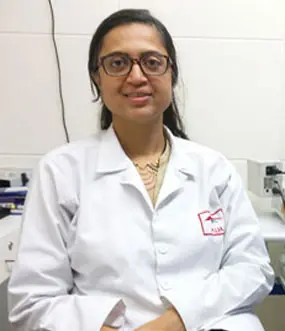
MBBS, MS (Ophthalmology), DNB · Fellowship in Cornea & Anterior Segment, L V Prasad Eye Institute, Hyderabad
Gujarat Medical Council Reg. No. G-39262
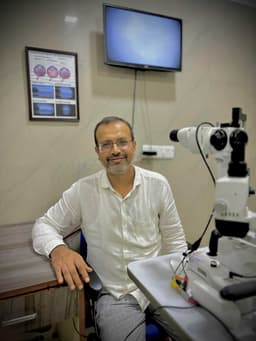
MBBS, MS (Ophthalmology) · Fellowship in Glaucoma, L V Prasad Eye Institute, Hyderabad
Gujarat Medical Council Reg. No. G-12281
Book a consultation
2nd Floor, Vinraj Plaza, opp. Government Press, Kothi Road, Anandpura, Vadodara, Gujarat 390001
Mon - Sat, 09:00 AM - 08:00 PM · Sunday closed
Start with a conversation.
Appointments
+91 81400 50055