
In this article
- The full guide
- What is a normal eye pressure?
- Is high eye pressure the same as glaucoma?
- Should I still get a glaucoma assessment if my vision is fine?
- What decides my risk?
- Will I need eye drops?
- What happens at follow-up visits?
- Can a thin cornea make my pressure look higher or lower?
- Which ophthalmologist in Vadodara should I see for high eye pressure?
- When is high pressure an emergency?
- Key Takeaways
- Final Thoughts
- Frequently asked questions
- ગુજરાતીમાં
Written by the Mungale Eye Hospital team
Medically reviewed by Dr. Sachin Mungale, MBBS, MS (Ophthalmology) · Fellowship in Glaucoma, L V Prasad Eye Institute, Hyderabad · Gujarat Medical Council Reg. No. G-12281 · Reviewed on 17 November 2026
Published 5 November 2026 · 6 min read
Who this page is for: Told your eye pressure is high but you see well? Ocular hypertension is a risk, not glaucoma itself. What decides your risk, when drops help and which tests come next.
Related on our site: Glaucoma Evaluation
The full guide
Being told at an eye camp, an optician or a routine check that your eye pressure is high can be worrying, especially when you see perfectly well. In most cases there is time to assess things calmly. Here is what it means and what to do next.
What is a normal eye pressure?
Eye pressure is measured in millimetres of mercury (mmHg). In most adults it lies between about 10 and 21 mmHg. That range is a statistical average, not a safe line: some eyes are damaged at lower pressures, and many stay healthy above it. Pressure also changes through the day, is often higher in the early morning, and varies with the method used. One reading is a starting point, not an answer.
Is high eye pressure the same as glaucoma?
No. Glaucoma means damage to the optic nerve, seen on examination, OCT or a visual field test. Ocular hypertension means the pressure is above the usual range while the optic nerve and visual field are normal. Some people with ocular hypertension go on to develop glaucoma; most do not, especially over a few years.
Should I still get a glaucoma assessment if my vision is fine?
Yes. Glaucoma affects side vision first, and central vision often stays sharp until late. Good reading vision therefore does not show that the optic nerve is healthy. A glaucoma evaluation checks pressure with more than one reading, corneal thickness, the drainage angle, the optic nerve and the visual field, so you know whether there is any damage now and how high your risk is.
What decides my risk?
The Ocular Hypertension Treatment Study (OHTS), which followed 1,636 people with high pressure, identified the main factors.
| Factor | Effect on risk |
|---|---|
| Higher pressure level | Raises risk |
| Thinner central cornea | Raises risk; thin corneas also make pressure read lower than it is |
| Older age | Raises risk |
| Larger cup in the optic nerve | Raises risk |
| Family history of glaucoma | Raises risk |
| Thicker central cornea | Lowers measured risk; pressure may read higher than it is |
| Normal nerve and field over repeated tests | Reassuring |
Your specialist combines these to judge whether monitoring or treatment makes more sense for you.
Will I need eye drops?
Not always. In OHTS, about 9.5% of untreated people developed glaucoma over five years, compared with about 4.4% of those given pressure-lowering drops. Treatment roughly halved the risk, but most untreated people did not develop glaucoma in that time. So the decision is shared: people with several risk factors or very high pressure are often advised to start drops, while others are monitored with regular tests. If drops are started, they are usually once or twice a day, and the plan is reviewed over time. See glaucoma treatments.
What happens at follow-up visits?
If you are monitored rather than treated, each visit repeats the key tests so any change is caught early. Pressure is measured again, ideally at a similar time of day. The optic nerve is examined and an OCT scan compared with your earlier ones, and the visual field is repeated, usually once or twice a year. If the nerve or field starts to change, or the pressure keeps rising, treatment is discussed. Keeping these visits, even when you feel well, is what makes monitoring safe.
Can a thin cornea make my pressure look higher or lower?
Yes. Standard pressure tests press on the cornea, so a thick cornea can make the reading appear higher than it really is, and a thin one can make it appear lower. Measuring corneal thickness with pachymetry helps interpret your reading, and a thin cornea is itself a risk factor in OHTS.
Which ophthalmologist in Vadodara should I see for high eye pressure?
A glaucoma specialist is the right doctor to assess ocular hypertension. At Mungale Eye Hospital, Kothi, Vadodara, Dr. Sachin Mungale, who trained in glaucoma at L V Prasad Eye Institute, Hyderabad, heads the glaucoma service. The hospital measures pressure with a Goldmann applanation tonometer and other methods, and has pachymetry, gonioscopy, OCT and a Humphrey visual field analyser. Bring the report that showed high pressure, your glasses, a list of medicines (especially any steroids) and any family history of glaucoma. See also glaucoma in the family.
When is high pressure an emergency?
Most high pressure causes no symptoms. But a sudden, very high rise can happen when the drainage angle closes, called acute angle closure. Warning signs are severe eye pain, a red eye, blurred vision, haloes around lights, headache, nausea and vomiting. This needs treatment within hours.
Key Takeaways
- High pressure with a healthy optic nerve is ocular hypertension, not glaucoma.
- Normal vision does not rule out early glaucoma, so a full assessment matters.
- Corneal thickness, age, pressure level, nerve appearance and family history decide the risk.
- In OHTS, drops roughly halved the five-year risk, but many people can be monitored.
- Sudden pain, redness and haloes need emergency care.
Final Thoughts
High eye pressure is a reason to look closely, not to panic. A full assessment gives you a clear picture and a plan. To see Dr. Sachin Mungale at Mungale Eye Hospital, Kothi, Vadodara, call or WhatsApp +91 81400 50055, or plan your visit.
Medical Disclaimer: This page is general information. It does not replace an examination of your own eyes.
Frequently asked questions
There is no single dangerous number for everyone. Most eyes sit between about 10 and 21 mmHg, and risk rises as pressure goes higher, especially above the mid-20s. Very high pressure, for example above 30 mmHg, usually needs prompt treatment. What matters most is your pressure together with your corneal thickness, optic nerve and visual field.
Caffeine may cause a small, short rise in eye pressure in some people, and stress can affect pressure slightly, but neither is a known cause of glaucoma. Moderate tea or coffee is generally fine. If you have glaucoma or high pressure, mention large daily amounts to your doctor, and avoid drinking a lot just before a pressure test.
Pressure varies naturally, and a single high reading may be lower when repeated, especially if the first was taken at a camp or with a different method. True ocular hypertension usually persists. That is why pressure is rechecked on more than one occasion with a Goldmann tonometer before any decision about treatment is made.
Not necessarily. Many people with ocular hypertension are monitored without drops. If drops are started, they are usually continued long term because they control pressure rather than change the eye permanently. Your doctor reviews the plan regularly, and some people later switch to laser or other options if those suit them better.
At first, pressure is usually rechecked within a few weeks to a few months to confirm the reading. After that, people with ocular hypertension are typically reviewed every six to twelve months, with optic nerve scans and visual fields repeated regularly. Your specialist sets the interval based on your risk factors and test results.
Head-down yoga poses, such as headstands, can raise eye pressure sharply while the position is held, and the pressure falls again afterwards. Most other yoga and regular exercise are fine and may even lower pressure slightly. If you have glaucoma or high pressure, ask your eye doctor before practising long head-down poses.
ગુજરાતીમાં
આંખનું પ્રેશર વધારે હોય પણ ઓપ્ટિક નર્વ અને બાજુની નજર સામાન્ય હોય તો તેને ઓક્યુલર હાઇપરટેન્શન કહે છે. તે ઝામરનું જોખમ વધારે છે, પણ પોતે ઝામર નથી. ઘણા લોકોને માત્ર નિયમિત તપાસની જરૂર હોય છે.
મોટા ભાગના લોકોમાં પ્રેશર લગભગ 10 થી 21 mmHg હોય છે, પણ એક જ આંકડાથી નિર્ણય થતો નથી.
Related questions this page covers
- What is a normal eye pressure?
- Is high eye pressure the same as glaucoma?
- Should I still get a glaucoma assessment if my vision is fine?
- What decides my risk?
- Will I need eye drops?
- What happens at follow-up visits?
- Can a thin cornea make my pressure look higher or lower?
- Which ophthalmologist in Vadodara should I see for high eye pressure?
- When is high pressure an emergency?
- What eye pressure is dangerous?
- Can stress or caffeine raise eye pressure?
- Can high eye pressure come down on its own?
- Will I need drops for life?
- How often should my pressure be checked?
- Can yoga or headstands affect eye pressure?
Author and medical reviewer
Prepared by the Mungale Eye Hospital team. Medically reviewed and approved by Dr. Sachin Mungale, MBBS, MS (Ophthalmology), Glaucoma Fellowship (L V Prasad Eye Institute, Hyderabad) · Gujarat Medical Council Reg. No. G-12281 · Last reviewed 17 November 2026
Sources
- Kass MA, Heuer DK, Higginbotham EJ, et al. The Ocular Hypertension Treatment Study: a randomized trial determines that topical ocular hypotensive medication delays or prevents the onset of primary open-angle glaucoma. Arch Ophthalmol. 2002;120(6):701 to 713.
- Gordon MO, Beiser JA, Brandt JD, et al. The Ocular Hypertension Treatment Study: baseline factors that predict the onset of primary open-angle glaucoma. Arch Ophthalmol. 2002;120(6):714 to 720.
- European Glaucoma Society. Terminology and Guidelines for Glaucoma, 5th Edition. Br J Ophthalmol. 2021;105(Suppl 1):1 to 169.
- American Academy of Ophthalmology. Primary Open-Angle Glaucoma Suspect Preferred Practice Pattern. Ophthalmology. 2021.
- Mungale Eye Hospital website: glaucoma evaluation page and Dr. Sachin Mungale's profile, for devices and the specialist named.
Reviewed by
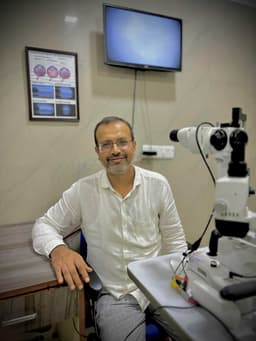
MBBS, MS (Ophthalmology) · Fellowship in Glaucoma, L V Prasad Eye Institute, Hyderabad
Gujarat Medical Council Reg. No. G-12281
Book a consultation
2nd Floor, Vinraj Plaza, opp. Government Press, Kothi Road, Anandpura, Vadodara, Gujarat 390001
Mon - Sat, 09:00 AM - 08:00 PM · Sunday closed
Start with a conversation.
Appointments
+91 81400 50055