
Written by the Mungale Eye Hospital team
Medically reviewed by Dr. Meeta Mungale, MBBS, MS (Ophthalmology), DNB · Fellowship in Cornea & Anterior Segment, L V Prasad Eye Institute, Hyderabad · Gujarat Medical Council Reg. No. G-39262 · Reviewed on 8 October 2026
Published 8 October 2026
Part of our guide: Corneal Transplant Surgery: When It Is Needed, Types, Recovery & Risks
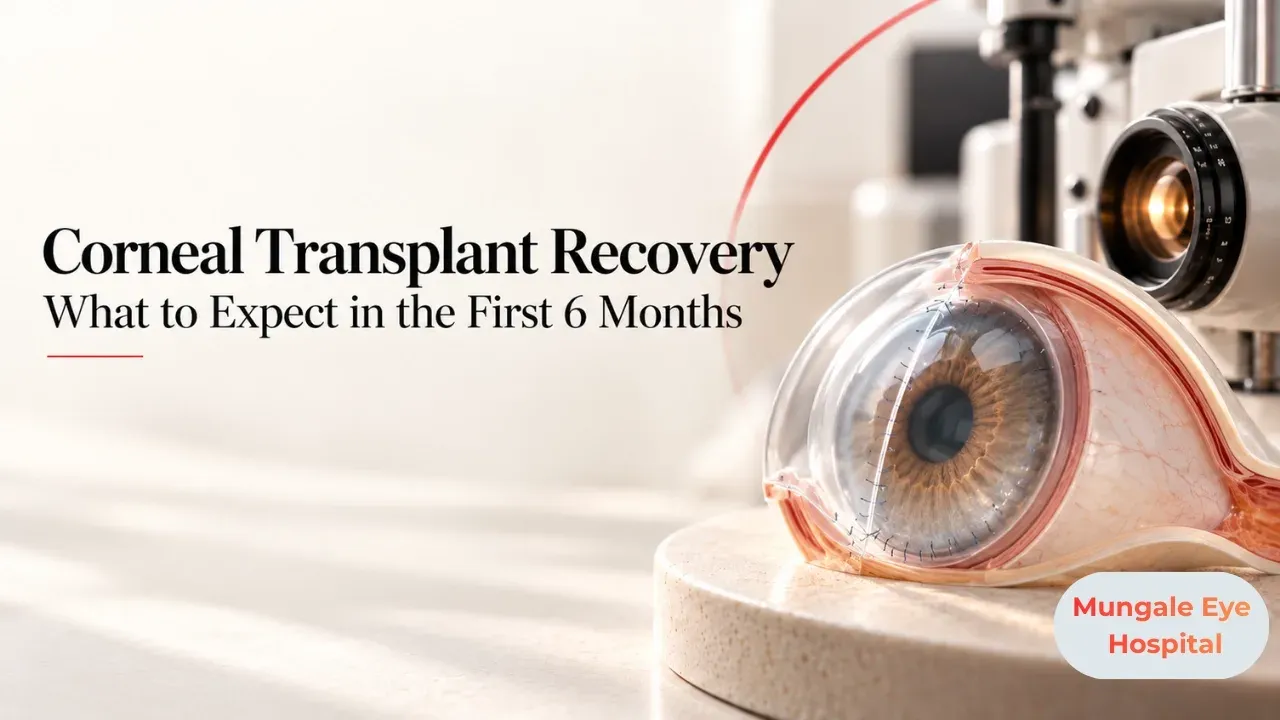
Recovery after a corneal transplant is gradual. How quickly vision improves depends on the type of transplant, the condition being treated and how well the eye heals. Careful use of eye drops, protecting the eye and attending follow-up visits are essential for success.
What Happens in the First Week?
What Happens in Weeks 2 to 6?
What Happens in Months 2 to 6?
How Do Different Transplants Recover?
DMEK
Often the fastest recovery, with useful vision within weeks for many patients.
DSEK
Recovery is usually quicker than PK, with vision improving over weeks to a few months.
DALK and PK
Stitches stay for months. Vision improves gradually and may take a year or more to stabilise.
Why Are Eye Drops So Important?
Steroid drops prevent rejection and inflammation. Stopping them early increases the risk of rejection. Steroids can raise eye pressure, so regular checks are needed.
What Activities Should You Avoid?
What Are Warning Signs?
Remember RSVP: Redness, Sensitivity to light, Vision decrease, Pain. Contact your eye surgeon urgently if any of these appear, as they may signal rejection or infection.
Key Takeaways
Final Thoughts
Patience and careful follow-up help a new cornea settle and give the best vision possible. Dr. Meeta Mungale and the team at Mungale Eye Hospital in Vadodara guide patients through every stage of transplant recovery.
Frequently Asked Questions
Endothelial transplants such as DMEK often allow useful vision within weeks, while PK and DALK may take many months to a year or more to stabilise. Follow-up continues long term.
Steroid drops are usually continued for months and tapered slowly. Some patients use low-dose drops long term. Do not stop drops without your surgeon's advice.
Many people return to desk work within one to a few weeks, depending on the transplant type and job. Avoid dusty or physically demanding work until your surgeon agrees.
Warning signs include redness, light sensitivity, reduced vision and pain, remembered as RSVP. Contact your surgeon urgently if these occur.
Light screen use is usually fine after the first few days if comfortable. Take breaks and use lubricating drops if advised. Follow your surgeon's guidance.
Sources and further reading
Reviewed by
MBBS, MS (Ophthalmology), DNB · Fellowship in Cornea & Anterior Segment, L V Prasad Eye Institute, Hyderabad
Gujarat Medical Council Reg. No. G-39262
Book a consultation
2nd Floor, Vinraj Plaza, opp. Government Press, Kothi Road, Anandpura, Vadodara, Gujarat 390001
Mon - Sat, 09:00 AM - 08:00 PM · Sunday closed
Related Articles
Start with a conversation.
Appointments
+91 81400 50055