
Written by the Mungale Eye Hospital team
Medically reviewed by Dr. Meeta Mungale, MBBS, MS (Ophthalmology), DNB · Fellowship in Cornea & Anterior Segment, L V Prasad Eye Institute, Hyderabad · Gujarat Medical Council Reg. No. G-39262 · Reviewed on 13 October 2026
Published 13 October 2026
Part of our guide: Pterygium: Causes, Symptoms, Stages, Treatment & Surgery
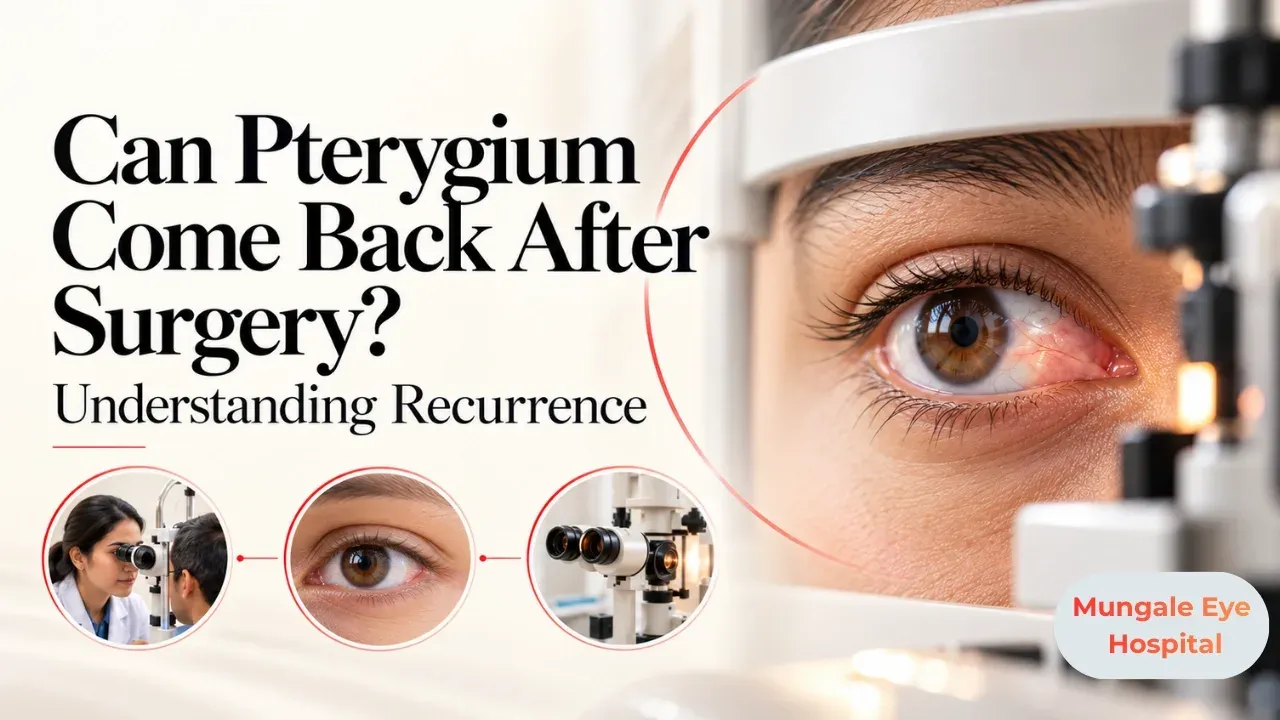
Yes, a pterygium can come back after surgery. This is called recurrence. It usually happens within the first year, when the healing tissue becomes overactive and grows back toward the cornea. Modern techniques, especially using a conjunctival graft, have made recurrence much less common than with simple removal alone.
Why Does Pterygium Come Back?
After removal, the eye heals by forming new tissue. In some people, this healing response becomes too strong. Fibrous tissue and blood vessels grow back over the area and move toward the cornea again. Continued sun exposure and inflammation can encourage this.
What Increases the Risk?
How Do Surgeons Lower Recurrence?
Conjunctival autograft
Healthy tissue from under the upper lid is placed over the bare area. This acts as a barrier and is now a standard approach.
Tissue glue
Fibrin glue holds the graft in place with less irritation than stitches, which may help healing.
Additional treatments
In selected or recurrent cases, surgeons may use medicines like mitomycin C or an amniotic membrane graft to control healing.
What Are the Early Signs of Recurrence?
Early recurrence may be managed with drops. Larger regrowth may need repeat surgery, ideally by an experienced surgeon.
How Can You Protect Your Eye?
Key Takeaways
Final Thoughts
The possibility of recurrence should not stop you from having needed surgery. With modern techniques and good aftercare, most patients have lasting results. For surgery planning and follow-up care, you can consult Dr. Meeta Mungale, an ophthalmologist at Mungale Eye Hospital in Vadodara.
Frequently Asked Questions
Recurrence usually appears within the first 6 to 12 months after surgery, while the eye is still healing. It can occasionally appear later. This is why regular follow-up visits during the first year are important.
A conjunctival graft greatly lowers the risk, but no method can promise zero recurrence. Good surgical technique, proper drop use and sun protection together give the best long-term results.
Yes. A recurrent pterygium can be removed again, often with extra techniques such as grafts, amniotic membrane or medicines that reduce scarring. Repeat surgery is usually more complex and should be done by an experienced surgeon.
Yes. Younger patients tend to have a stronger healing response, which can raise the chance of regrowth. Surgeons may use additional measures in younger people to lower this risk.
UV exposure can encourage inflammation and regrowth. Wearing UV-blocking sunglasses and a hat outdoors is one of the simplest ways to protect the operated eye in the long term.
Anti-inflammatory drops can calm early redness and may slow mild regrowth. They cannot remove established tissue. Your doctor will decide whether drops, monitoring or repeat surgery is best.
Sources and further reading
Reviewed by
MBBS, MS (Ophthalmology), DNB · Fellowship in Cornea & Anterior Segment, L V Prasad Eye Institute, Hyderabad
Gujarat Medical Council Reg. No. G-39262
Book a consultation
2nd Floor, Vinraj Plaza, opp. Government Press, Kothi Road, Anandpura, Vadodara, Gujarat 390001
Mon - Sat, 09:00 AM - 08:00 PM · Sunday closed
Related Articles
Start with a conversation.
Appointments
+91 81400 50055