
Written by the Mungale Eye Hospital team
Medically reviewed by Dr. Meeta Mungale, MBBS, MS (Ophthalmology), DNB · Fellowship in Cornea & Anterior Segment, L V Prasad Eye Institute, Hyderabad · Gujarat Medical Council Reg. No. G-39262 · Reviewed on 13 October 2026
Published 13 October 2026
Part of our guide: Pterygium: Causes, Symptoms, Stages, Treatment & Surgery
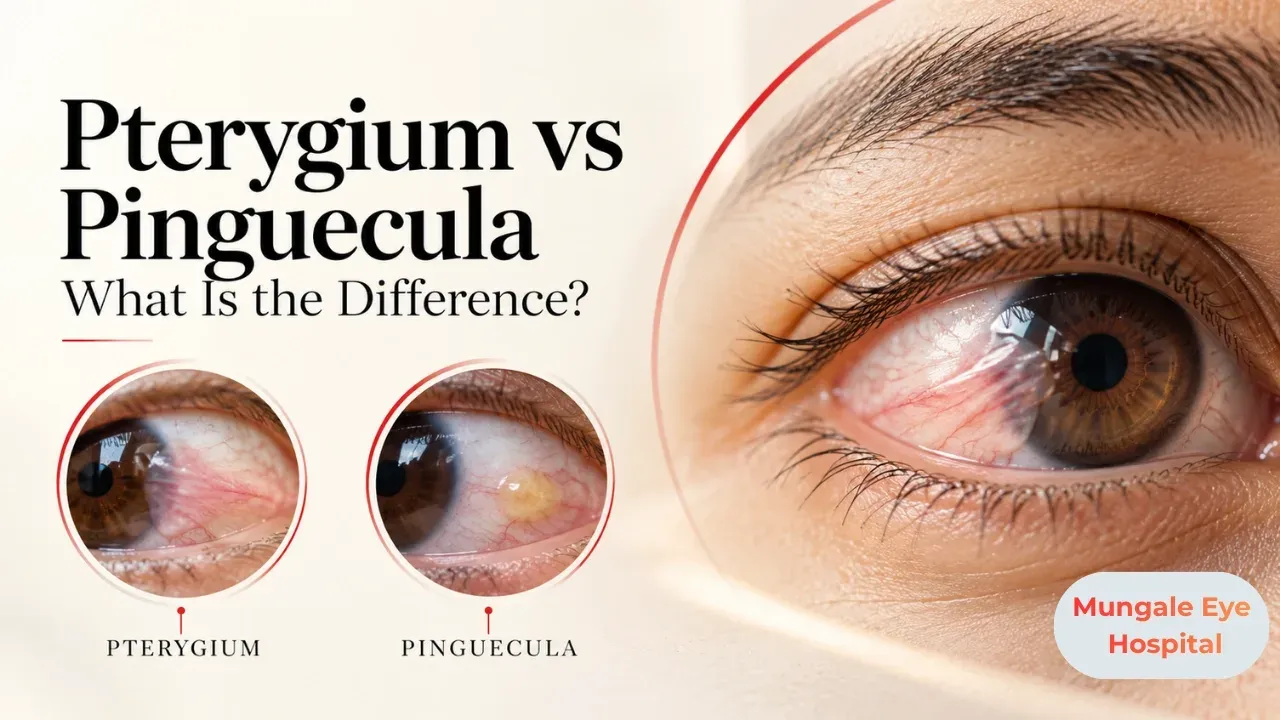
Pinguecula and pterygium are both growths on the white of the eye linked to sun exposure. The key difference is location. A pinguecula stays on the white of the eye and does not grow onto the cornea. A pterygium is a wedge-shaped growth that extends onto the cornea and can affect vision.
What Is a Pinguecula?
A pinguecula is a yellowish, slightly raised patch on the conjunctiva. It is made of protein, fat or calcium deposits caused by long-term UV exposure, dust and wind. It is very common in adults who spend time outdoors and usually appears on the side nearer the nose.
What Is a Pterygium?
A pterygium is a pink or white, fleshy growth with visible blood vessels. It starts on the white of the eye and grows in a wedge or wing shape onto the clear cornea. As it grows, it can pull on the cornea, cause astigmatism and eventually block vision.
How Do They Compare?
Location
Appearance
Effect on vision
Symptoms
Both can cause redness, dryness, irritation and a gritty feeling, especially after sun or dust exposure. An inflamed pinguecula is called pingueculitis.
Treatment
Can a Pinguecula Turn Into a Pterygium?
Some experts believe a pinguecula may sometimes progress to a pterygium, but this is not certain and does not happen in most people. Both share the same risk factors, so protecting your eyes from UV light helps prevent both.
When Should You See an Eye Doctor?
Your doctor can confirm what the growth is and rule out other rare conditions.
Key Takeaways
Final Thoughts
Seeing a bump on your eye can be worrying, but most of these growths are harmless and manageable. A quick eye exam tells you which one you have and what to watch for. For an assessment, you can consult Dr. Meeta Mungale, an ophthalmologist at Mungale Eye Hospital in Vadodara.
Frequently Asked Questions
No. A pinguecula is a harmless, non-cancerous growth. It may become red and irritated sometimes, but it does not grow onto the cornea or affect vision. Drops and UV protection usually keep it comfortable.
A pinguecula stays on the white of the eye and looks yellowish. A pterygium is pinkish, has blood vessels and extends onto the clear cornea. An eye doctor can confirm the diagnosis with a slit lamp exam.
Rarely. Surgery may be considered if it is constantly inflamed, interferes with contact lenses or is a strong cosmetic concern. Most people manage it well with lubricating drops and sun protection.
Yes. Because they share the same risk factors, some people have a pinguecula on one side and a pterygium on the other, or both in different eyes. Regular checks help monitor them.
Lubricating drops ease dryness and irritation. During flare-ups, a doctor may prescribe short courses of anti-inflammatory drops. Avoid using steroid drops without supervision because of possible side effects.
UV-blocking, wraparound sunglasses reduce sun exposure and may slow growth or reduce flare-ups. A hat adds extra protection. These habits are important for anyone with either condition.
Sources and further reading
Reviewed by

MBBS, MS (Ophthalmology), DNB · Fellowship in Cornea & Anterior Segment, L V Prasad Eye Institute, Hyderabad
Gujarat Medical Council Reg. No. G-39262
Book a consultation
2nd Floor, Vinraj Plaza, opp. Government Press, Kothi Road, Anandpura, Vadodara, Gujarat 390001
Mon - Sat, 09:00 AM - 08:00 PM · Sunday closed
Related Articles
Start with a conversation.
Appointments
+91 81400 50055