
Written by the Mungale Eye Hospital team
Medically reviewed by Dr. Meeta Mungale, MBBS, MS (Ophthalmology), DNB · Fellowship in Cornea & Anterior Segment, L V Prasad Eye Institute, Hyderabad · Gujarat Medical Council Reg. No. G-39262 · Reviewed on 12 October 2026
Published 12 October 2026
Part of our guide: Pterygium: Causes, Symptoms, Stages, Treatment & Surgery
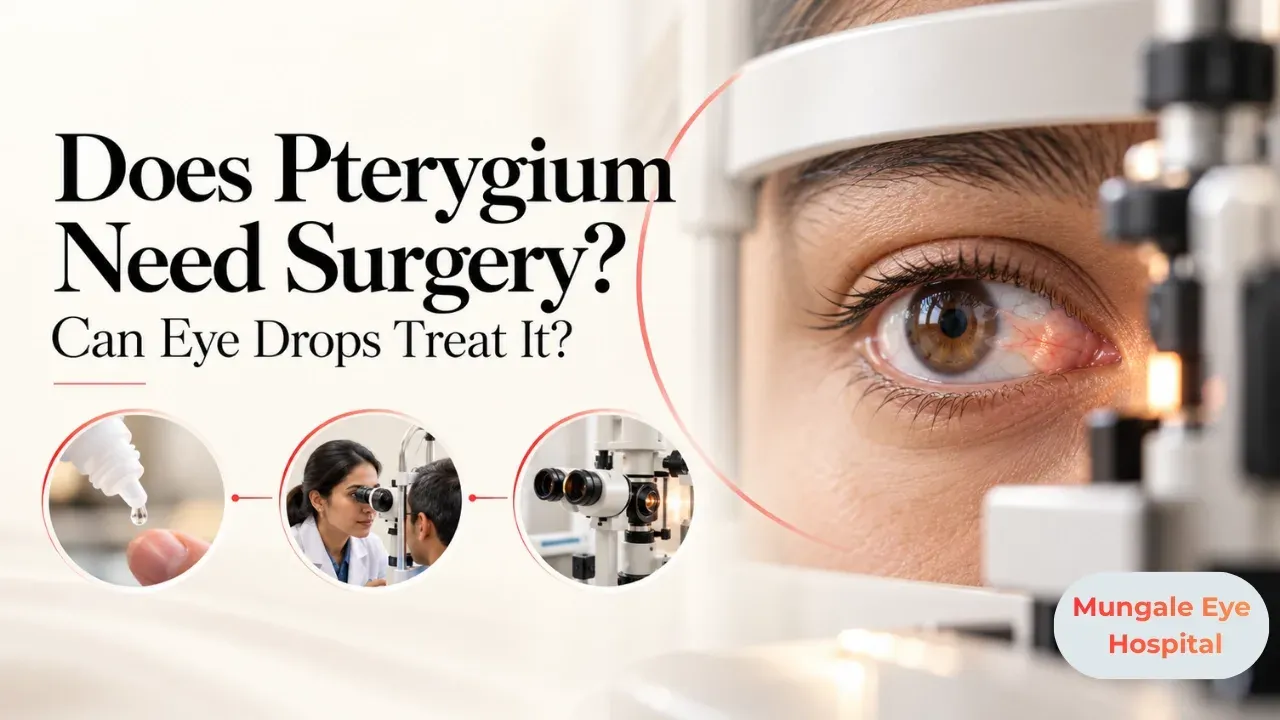
Eye drops can relieve the redness, dryness and irritation of a pterygium, but they cannot remove it or stop it from growing. Surgery is the only way to remove the growth. Many small, stable pterygia need only drops and monitoring, while those that affect vision, grow steadily or cause constant discomfort are usually advised surgery.
What Can Eye Drops Do?
Lubricating drops
Artificial tears soothe dryness and the gritty feeling, especially in hot, dusty weather.
Short-term anti-inflammatory drops
A doctor may prescribe mild steroid or other anti-inflammatory drops for a short period when the pterygium becomes very red and swollen. These must be used only under supervision.
What drops cannot do
When Is Surgery Advised?
Surgery is usually considered when:
What Does Modern Surgery Involve?
The surgery is usually done under local anaesthesia and takes about 30 to 45 minutes. The surgeon removes the growth and covers the bare area with a thin graft of healthy conjunctiva, usually taken from under the upper eyelid of the same eye. The graft is held in place with tissue glue or fine stitches.
Using a graft lowers recurrence compared with simple removal alone. In some cases, extra treatment such as mitomycin C or an amniotic membrane graft may be used.
Is Waiting Safe?
For small pterygia that are not changing, waiting with regular checks is often safe. Your doctor may measure the size and corneal shape at each visit. The key is not to wait so long that the growth affects the central vision.
Key Takeaways
Final Thoughts
Choosing between drops and surgery depends on size, growth and how much the pterygium affects your life and vision. A careful eye exam makes the decision clear. For personalised advice, you can consult Dr. Meeta Mungale, an ophthalmologist at Mungale Eye Hospital in Vadodara.
Frequently Asked Questions
No. Eye drops can reduce redness, swelling and dryness, which may make the growth look less obvious for a while, but they do not shrink or remove the tissue. Only surgery can remove a pterygium.
The surgery is done under local anaesthesia, so you should not feel pain during it. Some discomfort, watering and a gritty feeling are common for a few days afterward. Prescribed drops and pain relief help.
The best time is before it reaches the central cornea or causes significant astigmatism. Your doctor may advise surgery when it is growing steadily. Removing it at the right stage protects vision and gives better results.
No. Steroid drops are for short-term control of flare-ups only. Long-term use can raise eye pressure and cause cataract. Always use them under an eye doctor's guidance.
Modern grafting techniques usually leave the eye looking natural after healing. Some redness may remain for a few weeks. Over time, most patients find the eye looks much better than before.
Yes, it can recur, especially without a graft. Grafting and UV protection after surgery lower this risk. Regular follow-up visits help detect any early regrowth.
Sources and further reading
Reviewed by
MBBS, MS (Ophthalmology), DNB · Fellowship in Cornea & Anterior Segment, L V Prasad Eye Institute, Hyderabad
Gujarat Medical Council Reg. No. G-39262
Book a consultation
2nd Floor, Vinraj Plaza, opp. Government Press, Kothi Road, Anandpura, Vadodara, Gujarat 390001
Mon - Sat, 09:00 AM - 08:00 PM · Sunday closed
Related Articles
Start with a conversation.
Appointments
+91 81400 50055