
In this article
- The full guide
- What changes in the eyes after 40?
- Which tests matter most after 40?
- Where should I take my father or mother for an eye examination?
- What will the visit be like for an older parent?
- What are the common findings, and which need treatment?
- Warning signs that need a visit sooner
- Key Takeaways
- Final Thoughts
- Frequently asked questions
- ગુજરાતીમાં
Written by the Mungale Eye Hospital team
Medically reviewed by Dr. Sachin Mungale, MBBS, MS (Ophthalmology) · Fellowship in Glaucoma, L V Prasad Eye Institute, Hyderabad · Gujarat Medical Council Reg. No. G-12281 · Reviewed on 17 November 2026
Published 19 October 2026 · 6 min read
Who this page is for: The eye tests that matter after 40, how often to repeat them, and a practical guide to taking an elderly father or mother for an eye examination in Vadodara.
Related on our site: Eye Check-Up After 40: Tests, Frequency & Warning Signs
The full guide
After 40, an eye check-up needs to look for silent problems, not only for a new reading number. Glaucoma, cataract and diabetic eye changes often cause no symptoms early, and they are found only by a full examination.
What changes in the eyes after 40?
The eye changes slowly with age, and five changes matter most.
- Reading difficulty (presbyopia). The natural lens stiffens, so near focus weakens, usually from the early to mid forties. Reading glasses correct it.
- Cataract. The lens slowly turns cloudy, causing haze, glare and fading colours.
- Glaucoma. The risk of optic nerve damage rises with age, often without pain or blur until late.
- Dry eye. Tear quality falls with age, causing burning, grittiness or watering.
- Diabetes and blood pressure changes. These can damage the retina before vision changes.
The National Blindness and Visual Impairment Survey of India 2015 to 2019 found cataract caused 66.2 percent of blindness in people over 50, which is why a timely check matters for parents.
Which tests matter most after 40?
A full examination combines several tests, and each finds something different. The intervals below follow the American Academy of Ophthalmology's guidance for adults without symptoms.
| Test | What it finds | How often |
|---|---|---|
| Vision and glasses number | Reading difficulty, changing number | Every check-up |
| Eye pressure (tonometry) | Raised pressure, a glaucoma risk | Every check-up |
| Slit-lamp examination | Cataract, corneal and dry eye problems | Every check-up |
| Dilated retina and optic nerve check | Glaucoma, diabetic and age-related retinal changes | Every check-up |
| Visual field test and OCT scan | Early glaucoma damage | When the doctor suspects glaucoma or risk is high |
| Age | How often for a full examination |
|---|---|
| 40 | A baseline examination |
| 40 to 54 | Every 2 to 4 years |
| 55 to 64 | Every 1 to 3 years |
| 65 and older | Every 1 to 2 years |
| Diabetes (type 2) | At diagnosis, then at least yearly |
A family history of glaucoma, high eye pressure, long-term steroid use or an existing eye condition means more frequent checks. See complete eye examination.
Where should I take my father or mother for an eye examination?
Take a parent to an ophthalmologist who can do the full set of checks in one visit. Four questions help you choose anywhere:
- Is the examination done by an ophthalmologist, not only a glasses test?
- Are eye pressure, a slit-lamp examination and a dilated retina check included?
- Can cataract and glaucoma both be assessed and treated in the same place?
- Will someone explain the findings clearly to you and your parent?
At Mungale Eye Hospital, Kothi Road, Vadodara, Dr. Sachin Mungale, glaucoma specialist, and Dr. Meeta Mungale, cornea specialist, both trained at L V Prasad Eye Institute and both perform cataract surgery. Glaucoma tests such as the visual field, OCT and gonioscopy are done in the hospital. See glaucoma check-up.
What will the visit be like for an older parent?
Expect two to three hours, most of it waiting for drops to work. Dilating drops blur near vision for several hours, so your parent should not drive or ride a two-wheeler home.
- Bring: current and old glasses, earlier eye reports, and recent sugar and blood pressure reports.
- Medicine list: include every tablet and eye drop, especially blood thinners, diabetes medicines and any steroid.
- Comfort: sunglasses, water and a light snack; the hospital is on the 2nd floor, so call ahead if your parent uses a wheelchair.
- Hearing or memory difficulty: stay with your parent so you can explain their history and hear the advice.
See plan the visit for the address, timings and booking.
What are the common findings, and which need treatment?
Most findings after 40 need simple care or regular watching, and only some need treatment now.
| Finding | What usually happens |
|---|---|
| Reading difficulty | Reading or progressive glasses |
| Early cataract | A new glasses number and regular checks; surgery when it affects daily life |
| Raised eye pressure, normal optic nerve | Further tests and regular checks; treatment if risk is high |
| Glaucoma | Treatment to lower pressure, usually drops first, with lifelong follow-up |
| Dry eye | Lubricating drops, eyelid care and treating the cause |
Read more: is it cataract?, high eye pressure with normal vision and burning, gritty or watery eyes.
Warning signs that need a visit sooner
Do not wait for the next routine check if you or your parent notice gradual blur, more glare at night, wavy lines, needing more light to read, or a glasses number that keeps changing. Book an appointment within days. Read warning signs to see an eye doctor.
Key Takeaways
- After 40, a check-up needs eye pressure, a slit-lamp examination and a dilated retina check.
- Have a baseline examination at 40, then checks every 1 to 4 years depending on age.
- Plan two to three hours for a parent, and do not let them drive after drops.
- Most findings need glasses or watching; glaucoma and advanced cataract need treatment.
Final Thoughts
A parent who says "I can see fine" can still have early glaucoma or cataract, and a timely check keeps choices open. To book a check-up with Dr. Sachin Mungale at Mungale Eye Hospital, Kothi, Vadodara, call or WhatsApp +91 81400 50055.
Medical Disclaimer: This page is general information. It does not replace an examination of your own eyes.
Frequently asked questions
Yes. Glaucoma and early diabetic eye changes usually cause no pain or blur until they are advanced, and vision lost to glaucoma does not come back. A full examination with eye pressure and a dilated retina check finds these problems early, when treatment can protect sight. Good vision on the letter chart does not rule them out.
The American Academy of Ophthalmology advises a full eye examination every one to three years between 55 and 64, and every one to two years from 65. People with diabetes, glaucoma, high eye pressure or cataract under watch usually need checks more often, as their doctor advises, often once a year.
Yes. A complete examination checks both eyes for cataract on the slit lamp and for glaucoma with eye pressure and an optic nerve check. If glaucoma is suspected, extra tests such as a visual field or OCT may be done the same day or at a planned second visit, depending on time and fatigue.
Dilation is safe for almost everyone. In a small number of people with a narrow drainage angle, dilation can rarely trigger a sudden rise in pressure, so the doctor checks the angle first. If eye pain, redness, haloes or nausea appear after dilation, return or seek urgent care the same day.
Yes. People with type 2 diabetes should have a dilated eye examination at diagnosis and then at least once a year, because diabetes can damage the retina before vision changes. Bring recent sugar reports. If retinal changes are found, the doctor explains whether they need watching or treatment, which is available at the hospital.
In most cases a family member can stay with an older parent during the consultation and explanation, which helps with history and advice. Some tests are done in a quiet room one patient at a time. Tell the team at booking if your parent has hearing, memory or mobility difficulty so they can plan.
ગુજરાતીમાં
40 વર્ષ પછી ઝામર, મોતિયો અને ડાયાબિટીસની આંખ પર અસર ઘણી વાર કોઈ લક્ષણ વગર શરૂ થાય છે. તેથી આંખનું પ્રેશર, સ્લિટ લેમ્પ તપાસ અને ટીપાં નાખીને રેટિનાની તપાસ જરૂરી છે. 40 વર્ષે એક વાર પૂરી તપાસ કરાવો.
બે થી ત્રણ કલાકનો સમય રાખો, જૂના ચશ્મા, રિપોર્ટ અને બધી દવાઓની યાદી સાથે લાવો. ટીપાં પછી થોડા કલાક ઝાંખું દેખાય છે, તેથી વડીલને જાતે વાહન ચલાવવા ન દો.
Related questions this page covers
- What changes in the eyes after 40?
- Which tests matter most after 40?
- Where should I take my father or mother for an eye examination?
- What will the visit be like for an older parent?
- What are the common findings, and which need treatment?
- My father says he can see fine. Does he still need a check-up?
- How often should someone over 60 have an eye test?
- Can my mother have both eyes checked for cataract and glaucoma in one visit?
- Is it safe to dilate the eyes of an elderly person?
- My parent has diabetes. Is an extra eye test needed?
- Can I stay with my parent during the examination?
Author and medical reviewer
Prepared by the Mungale Eye Hospital team. Medically reviewed and approved by Dr. Sachin Mungale, MBBS, MS (Ophthalmology), Fellowship in Glaucoma (L V Prasad Eye Institute, Hyderabad), Gujarat Medical Council Reg. No. G-12281 · Last reviewed 17 November 2026
Sources
- National Blindness and Visual Impairment Survey India 2015 to 2019 (MoHFW and AIIMS New Delhi): cataract caused 66.2 percent of blindness in people aged 50 and above, as reported by Down To Earth.
- American Academy of Ophthalmology. Comprehensive Adult Medical Eye Evaluation Preferred Practice Pattern, 2026 update.
- American Academy of Ophthalmology. Frequency of Ocular Examinations, clinical statement. aao.org/clinical-statement/frequency-of-ocular-examinations
- American Academy of Ophthalmology. Primary Angle-Closure Disease Preferred Practice Pattern, 2020 (dilation and narrow angles).
- Mungale Eye Hospital website: doctor profiles and glaucoma evaluation page (checked 14 November 2026).
Reviewed by
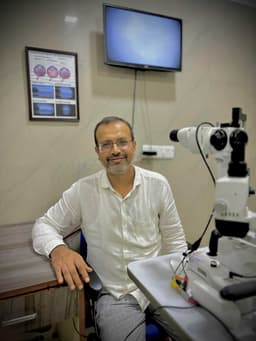
MBBS, MS (Ophthalmology) · Fellowship in Glaucoma, L V Prasad Eye Institute, Hyderabad
Gujarat Medical Council Reg. No. G-12281
Book a consultation
2nd Floor, Vinraj Plaza, opp. Government Press, Kothi Road, Anandpura, Vadodara, Gujarat 390001
Mon - Sat, 09:00 AM - 08:00 PM · Sunday closed
Start with a conversation.
Appointments
+91 81400 50055